Page 2 – Wiss

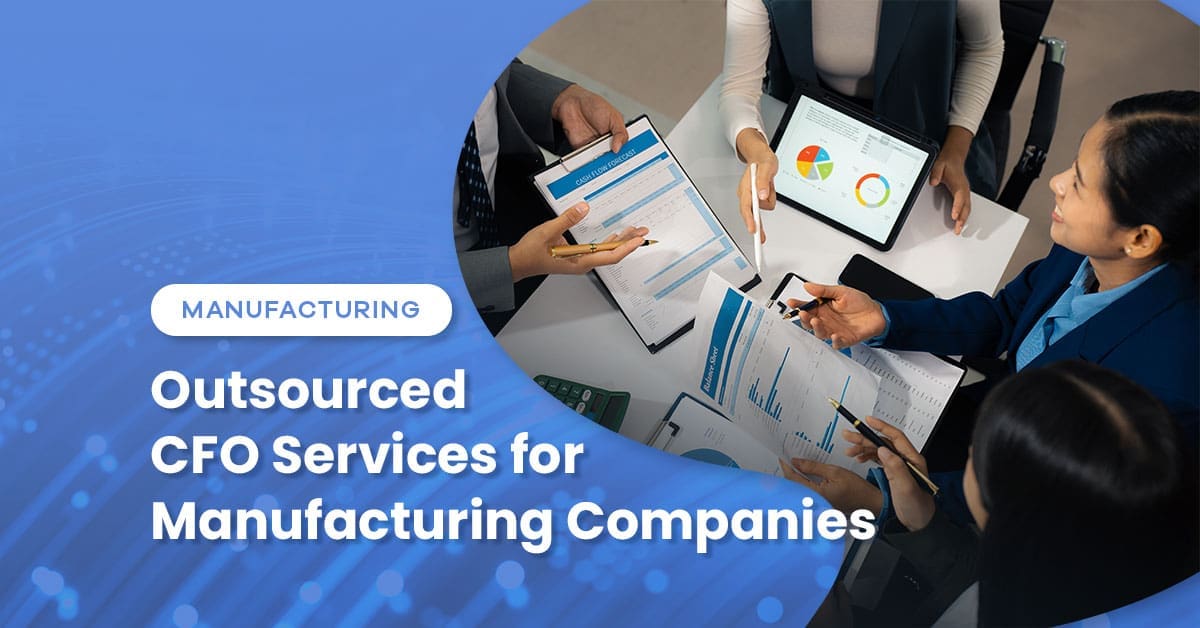
Outsourced CFO Services for Manufacturing Companies

Key Takeaways

  • A full-time CFO may cost $220,000-300,000 annually in fully burdened compensation — before benefits, payroll taxes, and equity. Most mid-sized manufacturers need the expertise without the fixed cost structure that comes with it.
  • Outsourced CFO services and co-sourced CFO arrangements deliver senior-level financial leadership — including FP&A, cash flow management, KPI reporting, and strategic planning — at a fraction of in-house cost.
  • The distinction matters: fully outsourced CFO services replace the entire finance leadership function; co-sourcing supplements an existing controller or finance team with senior CFO-level advisory support. Wiss offers both.
  • Manufacturing companies specifically benefit from CFO advisory expertise in job costing accuracy, inventory valuation, capital equipment analysis, and cost accounting — areas where generalist finance support consistently falls short.
  • Bottom Line: If your manufacturing company is running financial operations without senior CFO oversight, you are making capital allocation, pricing, and growth decisions without the financial intelligence those decisions require.

At some point, every growing manufacturer hits the same wall. The controller is buried in the month-end close. The owner is reviewing two-week-old financial statements. Nobody is running a 13-week cash forecast. Capital equipment decisions are being made based on gut feel and last year’s tax return. And the idea of hiring a full-time CFO — at $350,000 or more annually, fully burdened — feels like a problem for a larger company.

It doesn’t. It belongs to you right now. The question is not whether you need senior financial leadership. It’s whether you need to pay for it full-time.

What a Manufacturing CFO Actually Does — and Why It Matters

The controller closes the books. The CFO uses those books to run the business.

That distinction is not semantic. A controller ensures that your financial statements are accurate and that your close process runs on schedule. A CFO takes that financial data and translates it into the decisions that determine whether the business grows profitably, manages its cash position through demand fluctuations, prices its products correctly, and allocates capital to the right equipment and capacity investments.

For manufacturers specifically, CFO-level analysis touches every critical operational decision. Job costing and cost of goods sold accuracy determine whether you know which product lines are actually making money and which ones are quietly consuming margin. Working capital management — accounts receivable days, inventory turns, accounts payable terms — is the difference between a cash-generative operation and one that is perpetually stretched thin despite solid revenue. Capital equipment analysis requires a financial model that accounts for depreciation, financing costs, maintenance, and productive capacity before a purchase order is signed.

Without senior financial oversight, these decisions still get made. Just without the right information.

The True Cost of the In-House CFO Calculation

A full-time CFO at a mid-sized manufacturing company commands a base salary in the range of $220,000 to $300,000 annually. Add payroll taxes, health and dental benefits, a 401(k) match, and any long-term incentive or equity component, and the fully burdened annual cost lands between $300,000 and $400,000 — conservatively.

That is a fixed cost on your income statement regardless of whether you need 40 hours of CFO-level attention this week or four. It is a cost that does not scale with your production volume, your seasonal cash cycle, or your current stage of growth.

Most lower-middle market manufacturers — those running between $10 million and $75 million in annual revenue — do not need a full-time CFO. They need CFO-level thinking applied consistently to the decisions that drive financial performance. Those are different things, and confusing them is expensive.

Outsourced vs. Co-Sourced: The Right Model for Your Operation

Wiss offers two distinct service structures for manufacturing companies, and the right one depends on your current finance function.

Fully Outsourced CFO Services replace the entire finance leadership layer. Wiss functions as your CFO and financial operations team — handling everything from month-end close oversight and financial reporting to cash flow forecasting, budget development, variance analysis, and strategic financial planning. This model fits manufacturers who do not have a dedicated controller or internal finance team, or who have outgrown a bookkeeper-level function and need to build a finance operation from the ground up.

Co-Sourced CFO Services work alongside your existing team. If you have a controller or a finance director handling day-to-day accounting operations, Wiss plugs in at the CFO advisory level — providing the strategic financial leadership, board-ready reporting, scenario modeling, and capital planning that your internal team is not structured to provide. You keep your existing staff. You add senior financial intelligence above them.

Both models are built to scale. As your operation grows, the scope of engagement grows with it. As your needs change — acquisition due diligence, a banking relationship requiring audited financials, a PE investor asking for tighter FP&A — Wiss adjusts without the HR process that comes with changing internal headcount.

What Wiss CFO Advisory Delivers for Manufacturers

Manufacturing financial management has specific demands that generic CFO support does not adequately address. Wiss’s CFO Advisory practice works with manufacturers on the financial functions that directly affect margin and cash position.

Cost accounting and product profitability. Manufacturers producing multiple SKUs or running multiple product lines often lack accurate contribution-margin data by product. Wiss builds and maintains the cost accounting structure that answers the question every manufacturing CFO needs answered: which products are actually making money at current volume and pricing?

Cash flow forecasting and working capital management. A 13-week rolling cash forecast is not a luxury for a manufacturer with 60-day receivables and 30-day supplier payment terms — it is the minimum viable financial intelligence for managing liquidity. Wiss builds and maintains cash forecasting models calibrated to your specific operating cycle.

Capital expenditure analysis. Every equipment purchase is a capital allocation decision. Wiss provides financial modeling — NPV, payback period, and fully burdened cost comparisons against current operations — to ensure that capital investments are evaluated on financial merit, not just operational preference.

Budget development and variance reporting. A budget without variance analysis is just a forecast that gets filed away. Wiss builds the budgeting and variance reporting structure that connects plan to actual performance, identifies what is driving gaps, and gives leadership the information needed to act.

Banking and lender relationships. Manufacturers carrying equipment lines, revolving credit facilities, or real estate debt need financial reporting that satisfies lender covenant requirements and supports credit conversations. Wiss prepares financial packages and maintains lender relationships to keep your credit access intact.

The Wiss Difference: Senior Expertise, Manufacturing Depth, AI-Powered Efficiency

Wiss CFO Advisory clients receive a team, not a solo advisor. The engagement is backed by Wiss’s full accounting practice — tax, audit, and financial operations — so the CFO advisory work connects directly to your tax planning, compliance, and financial reporting without the coordination overhead of managing multiple outside firms.

Wiss’s outsourced accounting model is powered by AI automation through the Basis AI platform, which handles the repetitive financial operations — reconciliations, reporting, AP, and AR management — that typically consume staff time. That means the Wiss advisors working with your business spend their time on the analysis and strategic work that actually moves your financial performance, not on transactional processing.

Is This the Right Moment for Your Manufacturing Company?

The answer is probably yes if any of the following describes your current situation: your financial close takes more than 10 days; you do not have a current cash forecast; your last major capital equipment purchase was not preceded by a formal financial model; you are pricing based on cost-plus estimates rather than actual margin data; or your controller is the most senior financial person in the building.

None of these are permanent conditions: they are the predictable result of a finance function that has not kept pace with the complexity of the operation it supports.

Wiss CFO Advisory Services for manufacturing companies are designed to close that gap — with the right level of engagement, the right depth of manufacturing financial expertise, and a service model that scales to your operation rather than requiring your operation to scale around it.

Contact Wiss to discuss how outsourced or co-sourced CFO services can support your manufacturing company’s financial operations.

Cash Flow Management for Construction Contractors

Key Takeaways

  • Profitability and liquidity are independent variables in construction: A contractor can report high net income under percentage-of-completion while simultaneously being unable to make payroll, because recognized revenue and collected cash are two entirely different things.
  • Billing velocity is your primary cash flow lever: The speed and timing with which you convert earned revenue into invoiced receivables, and invoiced receivables into collected cash, determines whether you’re funding your projects or your projects are funding themselves.
  • Retainage receivable is earned value, not Working Capital: Retainage withheld by owners, typically 5–10% of each pay application, represents real earned value that lives on your balance sheet for months or years before it converts. Managing retainage release is an active discipline, not a passive wait.
  • A 13-week rolling cash flow forecast is the difference between managing the business and reacting to it: Weekly forward visibility into cash inflows, outflows, and the specific timing of retainage releases, subcontractor payments, and owner pay cycles is the CFO’s core operating tool, not a quarterly deliverable.
  • Bottom Line: Construction cash flow management is not an accounting exercise. It is the active, disciplined management of timing — and timing, in this industry, is the difference between a thriving contractor and a technically profitable one that can’t make it through August.

Here is a fact about construction finance that never ceases to be interesting: some of the most profitable contractors in the country have run out of cash. Not because they were badly run. Not because their jobs were losing money. But because they were growing fast, carrying a growing underbillings balance across a portfolio of large projects, waiting on retainage from three owners simultaneously, and paying their subs on a 30-day cycle while collecting from their GC on a 60-day one. The income statement looked great. The bank account told a different story.

Cash flow management in construction is the art, and it is an art of recognizing that revenue recognition and cash collection are not the same event, that growth consumes cash before it generates it, and that the timing of money moving in and out of the business requires the same rigor and attention you’d apply to a job cost schedule. CFOs who internalize that framing run better companies. The ones who don’t spend much time making emergency calls to their bankers.

The Structure of the Problem: Why Construction Cash Flow Is Different

Most businesses have a relatively predictable cash flow cycle: sell something, invoice it, collect it. The cycle repeats. Construction doesn’t work that way.

Under the percentage-of-completion method, revenue is recognized continuously as costs are incurred, regardless of whether the owner has been billed for that revenue or has paid the bill. A contractor can have $2 million in recognized revenue sitting in contract assets (underbillings) that have never generated a single dollar of actual cash inflow. That revenue is real, it’s on the income statement, and it costs real money to produce — labor, materials, subcontractors, all of which were paid in cash.

At the same time, construction contracts are structured to be perpetually cash-short on the collection side. Pay applications submitted on the 25th of the month may not be reviewed and approved until the 10th of the following month. Payment may not arrive until the 30th or later, depending on the owner’s payment terms and the GC’s payment practices. And then there’s retainage the owner’s contractual right to withhold a percentage of every pay application until the project reaches substantial completion. Under a 12-month, $8 million contract with 10% retainage, the contractor has $800,000 in retainage receivable that it won’t see until well after the last punch list item is signed off, potentially 14–18 months after the first shovel hits the ground.

The net result is a business model that is structurally designed to consume working capital. Understanding that is step one. The CFO’s job is to manage it, not just observe it.

Billing: Your Most Controllable Cash Flow Variable

Given everything in construction that you cannot control, owner payment practices, weather delays, subcontractor performance, change order disputes billing velocity is remarkable precisely because it is almost entirely within your control. And most contractors underbill, bill late, or both.

The mechanics matter. A pay application submitted on the last day of the month rather than the 25th adds a full billing cycle to your collection timeline typically 30–45 days. Over the course of a project portfolio, that slippage compounds. A contractor with $50 million in annual revenue who consistently submits pay applications 5 days late is carrying somewhere between $600,000 and $800,000 in unnecessary underbillings at any given moment. That’s not a rounding error. That’s a line-of-credit draw.

Bill monthly, bill on schedule, and bill to the maximum defensible amount supported by the actual percentage-of-completion. On projects where billing milestones create timing mismatches — for example, a lump-sum contract structured around completion phases rather than monthly progress billings — understand exactly where each project falls on the billing schedule and plan cash accordingly. A milestone that hasn’t been invoiced yet is a future inflow with a specific probable date. It belongs on your 13-week cash forecast with a probability-weighted date of collection, not in the vague category of “money we’ll get eventually.”

Change orders deserve special mention. Unapproved change orders are among the most significant sources of underbillings in commercial construction. Work gets performed, costs get incurred, and a change order request sits in someone’s inbox waiting for owner approval. The work is done. The cost is on the books. The billing hasn’t moved. For projects with material unresolved change order exposure, track the aging of each unapproved CO, the contractual mechanism for resolution, and the owner’s historical payment behavior on disputed amounts. Manage the resolution process like an accounts receivable aging — because that’s exactly what it is.

Retainage: Manage the Release, Don’t Wait for It

Retainage receivable is one of the most overlooked opportunities in construction finance for working capital management. Most CFOs track it on the balance sheet and wait. The CFOs at well-run companies actively manage release timing with the same energy they’d apply to collecting a past-due invoice.

Know the contractual conditions for retainage reduction and release for every active contract. Many commercial contracts provide for a reduction in retainage — from 10% to 5% — when the project reaches 50% completion. That provision requires a formal request and documentation of completion status. It doesn’t happen automatically. If your contracts contain that provision and you’re not making the request at 50%, you are leaving money sitting on the table by choice.

On the back end of a project, the punch list is the most significant variable in retainage collection timing. Owners withhold retainage until substantial completion is achieved and the punch list is closed. Every open punch list item is a retainage hold. The field team’s urgency to complete the punch list — particularly on projects with large retainage balances — is a direct cash flow management issue that deserves CFO attention and, if necessary, escalation.

Maintain a retainage release schedule for each contract, including the retainage balance outstanding, the probable release trigger, and the estimated collection date. Update it monthly. Roll it into your 13-week cash forecast. Retainage that surprises you at year-end is a forecasting failure.

The 13-Week Cash Flow Forecast: Build It and Use It

A 13-week rolling cash flow forecast is the operational center of gravity for construction cash management. It is not a financial statement and it is not a budget, it is a forward-looking map of actual cash inflows and outflows, week by week, for the next quarter.

For a construction company, it should capture expected receipt timing of each outstanding pay application (by project, by owner, based on historical payment behavior), anticipated retainage releases by project and expected date, subcontractor payment obligations due under your downstream contracts, payroll disbursement dates, scheduled debt service, equipment lease payments, and any known extraordinary outflows — insurance audits, tax deposits, insurance renewals.

The value of the 13-week forecast is not the precision of the numbers. Early weeks will be more accurate than later ones. The value is the forward visibility it creates — the ability to see, four or six weeks in advance, that two large projects have slow-paying owners, a retainage release was delayed, and payroll is due in 10 days. That six-week window is the window for action: accelerating a billing, drawing on a line of credit proactively rather than reactively, negotiating a payment extension with a vendor, or having a direct conversation with an owner about a past-due pay application.

A CFO managing construction cash flow without a 13-week forecast is flying by instruments that are three months old. It works until it doesn’t.

Lines of Credit: A Tool, Not a Crutch

A revolving line of credit is the appropriate instrument for managing the working capital timing mismatches that are inherent in construction. It is not a substitute for billing discipline, retainage management, or cash forecasting. It is what you draw on when the timing gap between cash out and cash in is temporarily wider than your operating cash can support, which in a growing construction company is a regular occurrence, not a sign of distress.

Maintain your line of credit at full capacity before you need it. Lenders review construction company financials carefully, and a borrowing base that is stressed when you’re under cash pressure is a harder conversation than one reviewed during a period of strength. Keep your working capital ratios at levels your lender has documented as acceptable. Understand your covenant thresholds. And have the CFO-to-banker relationship developed enough that a proactive call about a temporary cash timing issue is handled smoothly—not treated as a crisis signal.

How Wiss CFO Advisory Services Supports Construction Cash Management

Construction cash flow management at the level described here requires financial leadership — not just bookkeeping support. It requires someone who understands the industry’s structural cash dynamics, can build and maintain a real-time cash forecasting model, and can translate cash position into strategic decisions about which projects to take, how aggressively to grow, and when to draw on available credit.

Wiss CFO Advisory Services gives construction companies access to that caliber of financial leadership — whether as a full fractional CFO engagement or as a targeted advisory overlay to an existing internal finance function. We work with contractors on billing process improvement, retainage tracking and release management, 13-week cash forecasting, and the working capital analysis that informs bonding capacity, lender relationships, and growth decisions.

Profitable construction companies run out of cash every year. The ones that don’t are managed by people who understood the risk and built the systems to stay ahead of it.

Contact the Wiss Construction Practice Team to discuss how CFO Advisory Services can strengthen your cash management operations.

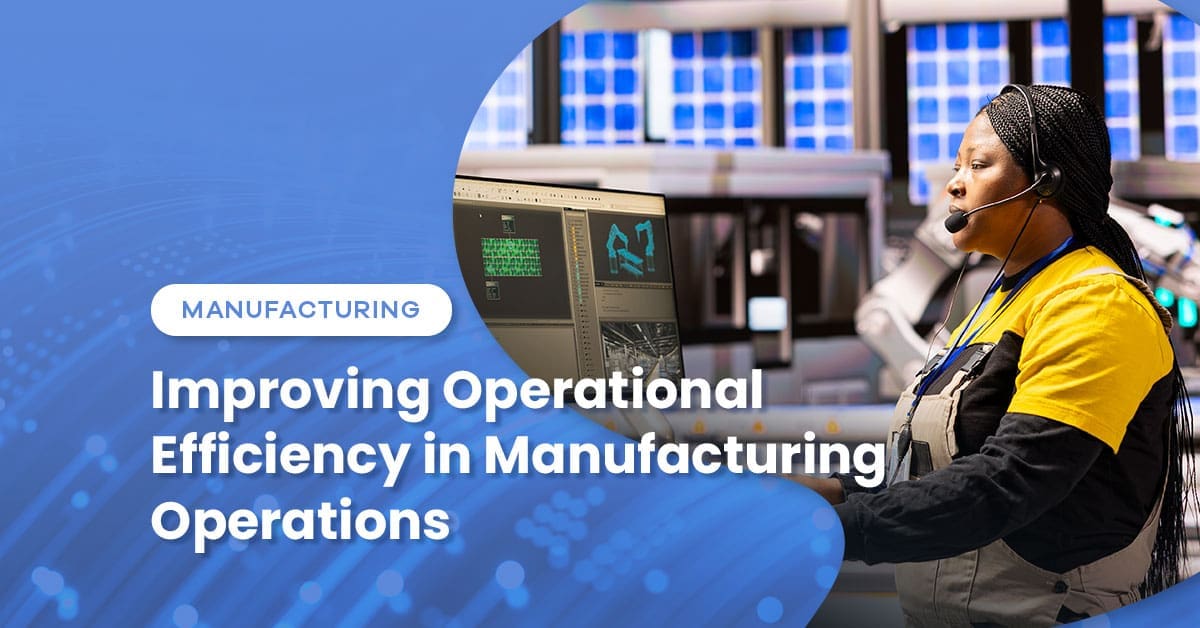
Improving Operational Efficiency in Manufacturing Operations

Key Takeaways

  • Overall Equipment Effectiveness (OEE) is the primary metric for quantifying operational efficiency in manufacturing — it accounts for availability, performance, and quality simultaneously. World-class OEE is generally benchmarked at 85% or above; the average manufacturer runs closer to 60%.
  • The majority of efficiency losses in a manufacturing operation are hidden within normal operations — they appear as acceptable variance rather than as visible failures. Identifying them requires cost data mapped to the process, not just to the department.
  • Labor productivity, scrap and rework rates, production cycle time, and inventory turnover are the four operational KPIs most directly connected to margin erosion in mid-sized manufacturers.
  • Technology investment without process discipline does not produce efficiency gains — it accelerates existing problems at a higher cost.
  • Bottom Line: Operational efficiency is a financial discipline first and an operations discipline second. The COO who owns the numbers owns the improvement.

Most efficiency problems in a manufacturing facility are not visible on the plant floor. They are visible on the income statement — as gross margin that is lower than it should be, as cost of goods sold that keeps creeping upward relative to revenue, as overtime that appears every quarter despite stable order volumes. The operations team calls it capacity. The finance team calls it variance. What it actually is, in most cases, is a collection of quantifiable inefficiencies that nobody has formally measured.

Improving operational efficiency is not a technology project or a lean initiative. It starts with knowing precisely where cost is leaking and why.

Start With OEE — Then Dig Into What’s Driving It

Overall Equipment Effectiveness is the standard metric for manufacturing operational performance. It is calculated as the product of three ratios: Availability (actual run time as a percentage of planned production time), Performance (actual output rate as a percentage of the theoretical maximum output rate), and Quality (conforming units as a percentage of total units started).

OEE = Availability × Performance × Quality

A line running at 90% availability, 85% performance, and 95% quality produces an OEE of 72.7%. That sounds reasonable until you compare it to a world-class benchmark of 85% — and recognize that the 12-point gap represents real, recoverable production capacity that is currently being consumed by downtime, speed losses, and defects.

The value of OEE is not the composite number — it’s the decomposition. A facility that loses primarily on availability has a different problem than one that loses primarily on quality. The former is a maintenance and scheduling problem. The latter is a process-control and incoming-material problem. Each has different root causes, different costs, and different remediation paths. Treating OEE as a single number, without decomposing its components, leads to the wrong diagnosis.

Practically: track OEE by machine, by shift, and by product line. The aggregate number will mask the variation that tells you where to focus.

Labor Productivity: The Metric Most Plants Measure Wrong

Labor productivity is typically expressed as units produced per labor hour or revenue per direct labor dollar. Both are valid, but both also obscure a more important question: what is the ratio of value-added labor time to total paid labor time?

In most manufacturing environments, direct labor hours include time spent on machine setup and changeover, waiting for materials or instructions, rework on nonconforming product, and non-production activities that appear on the time sheet as productive hours. These are not efficient — they are paid time without output.

A practical approach: conduct a time study on a representative production shift and categorize every hour into value-added production time, necessary non-value-added time (setup, changeover, maintenance), and pure waste (waiting, rework, searching for materials, unnecessary movement). The distribution is almost always a surprise. Operations teams that believe they are running at full utilization routinely discover that 20% to 30% of paid direct labor time is absorbed by waste categories.

The financial translation is direct: if a facility employs 40 direct labor workers at an average fully burdened cost of $55,000 per year, a 20% waste ratio represents $440,000 in annual labor cost producing no output. That is a recoverable number — but only if it has been quantified.

Scrap, Rework, and the Hidden Cost of Poor Quality

Scrap and rework are the most consistently undercosted line items in manufacturing financial statements. Most companies track the direct material cost of scrapped product. Few track the full cost: direct material, direct labor absorbed into the defective unit, machine time consumed, overhead allocated, and the cost of the replacement production run required to fulfill the original order.

The correct metric is Cost of Poor Quality (COPQ), which captures internal failure costs (scrap, rework, re-inspection), external failure costs (warranty claims, customer returns, field service), and appraisal costs (inspection labor, testing equipment). In a mid-sized manufacturer with $20 million in annual revenue, total COPQ typically runs between 5% and 15% of revenue — between $1 million and $3 million annually — a figure that rarely appears in a standard management report.

The practical implication: if your scrap reporting shows only material cost, you are understating the problem by a factor of two to four. Restate the cost of each defect using fully burdened cost per unit produced and the picture changes materially.

Inventory Turnover and the Working Capital Trap

Operational efficiency and working capital are closely connected, a connection COOs often underestimate. Excess raw material inventory, work-in-process that sits between production stages, and finished goods that age in the warehouse all consume cash and mask process problems.

Inventory turnover — Cost of Goods Sold divided by Average Inventory — tells you how efficiently the facility converts purchased material into shipped product. For a mid-sized discrete manufacturer, annual inventory turns of 6 to 12 are typical. Turns below 6 indicate that the facility is holding more inventory than its production velocity requires — generally a symptom of inaccurate demand forecasting, poor production scheduling, or supplier lead-time risk being buffered by excess stock.

The financial cost of excess inventory goes beyond the carrying cost percentage. It includes the opportunity cost of the working capital consumed, the obsolescence risk associated with slow-moving material, and the warehouse and handling costs of managing inventory that should not exist. A manufacturer reducing average inventory from $2.5 million to $1.8 million at a 25% carrying cost rate recovers $175,000 in annual carrying cost and frees $700,000 in cash — both of which are operational improvements, not financial ones.

The Sequencing That Actually Works

The sequence matters. Before investing in automation, ERP systems, or production technology, manufacturing operations need accurate financial data mapped to the specific processes consuming costs. The question is not “what technology should we implement?” — it is “where are the measurable cost losses, and what is driving each one?”

Once that is known, the solutions become obvious. A facility that is primarily losing due to machine availability invests in predictive maintenance and changeover reduction. One loses on quality, invests in process control, and incoming inspection. One loses labor productivity and restructures production scheduling and material flow. Each of these is a measurable intervention with a quantifiable expected return — not a broad operational initiative with hoped-for results.

At Wiss, our advisory practice works directly with manufacturing COOs and CFOs to map operational costs to process, quantify the efficiency losses that don’t appear in standard reporting, and build the financial case for targeted improvement. The work starts with the numbers, because that is always where the real answer is.

This article reflects general operational advisory principles applicable to manufacturing environments. Specific analysis and recommendations should be developed based on your facility’s actual cost structure, production data, and operational context.

Form 1023: How to Apply for 501(c)(3) Tax-Exempt Status

Key Takeaways

  • Form 1023 must be filed electronically through Pay.gov — paper submissions are no longer accepted.
  • File within 27 months of your organization’s formation date to secure tax-exempt status retroactive to that date. Miss that window and your exemption starts on the filing date, not your founding date.
  • Smaller organizations may qualify for Form 1023-EZ, a streamlined version with fewer requirements.
  • Three consecutive years of missed annual filings result in automatic revocation of tax-exempt status — with no exceptions.
  • Bottom Line: Form 1023 is not a mission statement exercise. The IRS needs a detailed description of your actual activities, not your aspirations.

Getting 501(c)(3) status is the first financial and legal milestone for most nonprofit organizations. It determines whether donations to your organization are tax-deductible, how you’re classified for state registration purposes, and what annual reporting obligations follow. The vehicle for that recognition is Form 1023, Application for Recognition of Exemption Under Section 501(c)(3) of the Internal Revenue Code.

Here is what founders and executive directors need to understand before filing.

Who Files Form 1023

Most organizations seeking recognition under section 501(c)(3) must file Form 1023. Three types of organizations are not required to file, though they may choose to — churches and certain integrated church auxiliaries, and organizations with gross receipts of $5,000 or less in each tax year.

Smaller organizations that don’t fall into those exempt categories should check eligibility for Form 1023-EZ, a streamlined application available at IRS.gov. The 1023-EZ eligibility worksheet determines whether your organization qualifies based on projected gross receipts, asset levels, and activity type.

The 27-Month Filing Window

Timing matters. If you file Form 1023 within 27 months of the end of the month in which your organization was legally formed, and the IRS approves your application, your tax-exempt status is effective retroactive to your formation date. That means donations received before you filed can still qualify as tax-deductible contributions.

File after that 27-month window, and your exemption begins on the date you submit the application — not when your organization was formed. Retroactive reinstatement is possible in some circumstances, but requires demonstrating reasonable cause and good faith, and is not guaranteed.

What the IRS Actually Wants to See

The most common reason Form 1023 applications require back-and-forth with the IRS is insufficient detail about activities. A mission statement is not enough. The IRS requires a specific narrative describing what your organization does, who carries out each activity, where it occurs, what percentage of your total time and expenses each activity represents, how it is funded, and how it furthers your exempt purpose.

If you plan to run an after-school tutoring program, describe the program — the curriculum, the students served, the funding sources, and how it advances educational purposes under section 501(c)(3). Vague language about “assisting underserved youth” will generate follow-up questions.

Required Documents and Financial Data

A complete Form 1023 submission includes your organizing document (articles of incorporation, trust agreement, or articles of association), your bylaws (if adopted), and financial data. Organizations that have existed for less than one year provide projected revenue and expense statements for three years. Organizations with 1 to 4 years of history provide actuals for completed years and projections for the remaining years. Organizations with 5 or more years of history provide the 5 most recent completed tax years.

All attachments must be consolidated into a single PDF file before submission through Pay.gov, which also collects the required user fee at the time of filing.

After You File

The IRS processes applications in the order received. Expedited review is available in limited circumstances — a pending grant where loss of funding would threaten operations, disaster relief, or an IRS processing error — but expedited review does not guarantee faster approval; it only guarantees faster placement in the queue.

While your application is pending, annual filing obligations still apply. If a Form 990-series return comes due before you receive your determination letter, file the return and mark “Application Pending” in the heading.

Once approved, your determination letter confirms your 501(c)(3) status, your foundation classification (public charity or private foundation), and your annual filing requirements. That letter is the document donors, grantmakers, and state regulators will ask to see.

The Annual Filing Requirement That Cannot Be Ignored

Tax-exempt status is not permanent by default. Organizations must file annual information returns — Form 990, 990-EZ, 990-PF, or 990-N, depending on size and classification — every year. Three consecutive years without a required filing result in automatic revocation of exempt status. Reinstatement requires a new application and, in most cases, payment of another user fee.

The Wiss tax advisory team assists nonprofits at every stage of the exemption process — from initial formation and Form 1023 preparation to annual compliance and reinstatement after revocation. 

Family Office Financial Management for Multi-Generational Real Estate Wealth

Key Takeaways

  • Multi-generational real estate portfolios face three compounding risks: estate tax exposure, ownership fragmentation across generations, and the absence of a governance structure that keeps family decision-making functional under pressure.
  • The One Big Beautiful Bill Act (OBBBA), enacted July 4, 2025, permanently preserved the elevated federal lifetime gift and estate tax exemption—currently $13.99 million per individual ($27.98 million for married couples in 2025)—eliminating the sunset that was previously scheduled for January 1, 2026. This fundamentally changes the wealth transfer calculus for real estate families.
  • Entity structures—Family Limited Partnerships (FLPs) and Family LLCs—remain central tools for transferring real estate interests at valuation discounts of 15% to 40%, leveraging the lack of control and marketability adjustments available for minority interests.
  • 1031 exchanges were preserved under the OBBBA, maintaining indefinite deferral of capital gains on commercial real estate through like-kind exchanges—one of the most powerful long-term wealth accumulation mechanisms available to real estate families.
  • Bottom Line: The tax environment in 2026 is unusually favorable for multi-generational real estate wealth transfer. The families who act with a coordinated plan will capture the full benefit. The families who wait will manage the consequences.

Most family real estate wealth does not fail because of bad properties; It fails because the financial architecture surrounding the properties was never built to survive the transition from the founder’s generation to the second, or from the second to the third.

The properties themselves often perform fine. The problems lie in inadequate entity structures, outdated estate plans, informal governance, and a tax strategy that is reactive rather than proactive. And then, somewhere between generation one and generation three, a portfolio that represents decades of work gets diluted, disputed, or distributed in ways the original owner never intended.

A family office approach to real estate wealth management is precisely what prevents that outcome. Here is what that looks like in 2026.

The OBBBA Changed the Planning Landscape—Permanently

Before the One Big Beautiful Bill Act was enacted on July 4, 2025, families with real estate portfolios valued above the pre-TCJA exemption baseline were planning around a hard deadline: the expanded lifetime exemption was scheduled to sunset on January 1, 2026, reverting to approximately $7 million per individual (indexed for inflation). The urgency was real, and significant wealth transfer activity occurred in 2024 and early 2025 specifically to capture the elevated exemption before it disappeared.

The OBBBA permanently preserved the elevated exemption. For 2025, the federal lifetime gift and estate tax exemption is $13.99 million per individual, or $27.98 million for married couples using portability. The exemption will continue to adjust annually for inflation. This removes the artificial deadline pressure—but it does not remove the planning imperative.

Real estate portfolios that appreciate over time will grow into taxable estate territory regardless of today’s exemption levels. A portfolio worth $20 million today that doubles over 15 years reaches $40 million—well above the individual exemption—and produces a federal estate tax liability at the 40% marginal rate on the excess. The question is not whether to plan, it is how to plan effectively now that the tax environment is stable enough to think clearly.

Entity Structure: The Foundation of Everything Else

The single most important structural decision for a multi-generational real estate family is how property is held. Properties owned individually in fee simple must go through probate and are subject to estate tax at date-of-death fair market value. They are often passed to multiple heirs as shared ownership, which is notoriously difficult to manage collectively.

Family Limited Partnerships and Family LLCs solve multiple problems simultaneously. They consolidate ownership into a single entity, preserve centralized management authority (typically in the founding generation or their designees), create a governance mechanism through the operating agreement or partnership agreement, and produce fractional interests that can be transferred to heirs and trusts at discounted values.

The valuation discount available on minority FLP or LLC interests—reflecting a lack of control and marketability—is typically 15% to 40%. The valuation discount depends on the nature of the entity, the restrictions in the governing documents, and the methodology used by the qualified appraiser. A $10 million real estate portfolio held in an FLP, with a 30% discount on transferred limited partnership interests, allows $14.3 million of portfolio value to be transferred using only $10 million of lifetime exemption. That is the leverage of entity-based gifting—and it compounds as the portfolio within the entity appreciates after the transfer.

The IRS scrutinizes FLP and LLC structures under IRC §2036, which can pull discounted transfers back into a decedent’s estate if the entity lacks business purpose, if the funding was deathbed in nature, or if the transferor retained the economic benefits of the transferred interests. Proper formation, genuine management activity, and clean separation of personal and entity finances are not optional—they are the conditions that make the structure defensible.

Trusts and the Mechanics of Multi-Generational Transfer

Irrevocable trusts are the primary vehicle through which real estate families move appreciated assets out of the taxable estate while retaining control over how those assets are managed and distributed. The structure selected depends on the family’s specific combination of income needs, estate planning objectives, and generation-skipping transfer (GST) tax exposure.

The Spousal Lifetime Access Trust (SLAT) is widely used among married couples with large real estate portfolios. One spouse establishes an irrevocable trust for the benefit of the other spouse, funding it with a portion of the grantor’s lifetime exemption. Assets in the SLAT are removed from the grantor’s taxable estate while remaining accessible to the beneficiary spouse for lifestyle or emergency purposes. Real estate or FLP interests transferred to an SLAT appreciate outside the grantor’s estate from the date of transfer forward. The risk is the reciprocal trust doctrine—if both spouses create mirror-image SLATs for each other, the IRS may collapse both structures and return the assets to the respective estates. The trusts must be meaningfully non-identical in terms, funding, and timing.

Grantor Retained Annuity Trusts (GRATs) are effective for transferring appreciated real estate when the Section 7520 rate—the IRS-prescribed discount rate used to value retained annuity streams—is low relative to the expected growth rate of the transferred asset. The grantor transfers property to the GRAT, retains an annuity stream for a fixed term, and at the end of the term, any value in excess of the projected growth transfers to beneficiaries gift-tax-free. Zero-out GRATs, structured so the present value of the annuity stream equals the initial transfer value, minimize gift tax exposure while transferring appreciation. Mortality risk is the primary limitation: if the grantor dies during the GRAT term, the assets return to the estate.

Generation-Skipping Trusts are appropriate for families intending to benefit grandchildren and more remote descendants. Transfers to these trusts consume both the lifetime gift exemption and GST exemption, both currently at $13.99 million per individual. Coordinating the GST exemption allocation with trust funding decisions—particularly for appreciating real estate assets—requires careful attention to the automatic allocation rules under IRC §2632 and the elections available to override them.

The 1031 Exchange as a Long-Term Wealth Building Tool

The preservation of the 1031 like-kind exchange under the OBBBA is one of the most significant long-term wealth management provisions for real estate families. Under IRC §1031, gain on the sale of investment or business real property is deferred when the proceeds are reinvested in qualifying like-kind replacement property within the prescribed identification and exchange periods—45 days to identify and 180 days to close.

For a family holding a commercial property with a low adjusted basis—a building acquired decades ago that has been depreciated and appreciated substantially—the ability to exchange into a larger or better-positioned asset without triggering capital gains tax is the engine of compounding. Each exchange resets the holding into a new asset, defers recognition of accumulated gain and depreciation recapture, and allows the family to redeploy the full pre-tax equity into the next investment.

The step-up in basis at death under IRC §1014 eliminates the deferred gain entirely for assets held by the owner until death. A family that executes successive 1031 exchanges over a 30-year holding period, then bequeaths the final property to heirs at a stepped-up basis, effectively converts what would have been taxable gains into tax-free wealth transfer. This strategy—defer, defer, step up—is one of the most tax-efficient wealth accumulation paths in the U.S. tax code, and it remains fully intact under current law.

Governance: The Discipline That Actually Preserves Wealth

The financial architecture—entities, trusts, exchanges—only functions if the family can make coherent decisions about the portfolio over time. That requires governance. And governance, in the context of a multi-generational real estate family, means documented decision-making authority, distribution policies, and dispute-resolution mechanisms in place before disputes arise.

Operating agreements and partnership agreements should specify who controls day-to-day management, what decisions require family consensus or supermajority approval, how distributions are determined and funded, what happens when a family member wants to exit a shared ownership position, and how new-generation members enter the ownership structure. These are not pleasant conversations. They are the conversations that determine whether the third generation inherits a portfolio or a lawsuit.

Family investment policy statements, annual family meetings with formal financial reporting, and clear protocols for capital calls and reinvestment decisions are the operational layer that supports the legal structure. Without them, the most elegantly drafted FLP agreement eventually becomes a contested document among heirs who never agreed on the underlying strategy.

What Wiss Family Office Provides

Wiss Family Office works with multi-generational real estate families at the intersection of tax planning, estate strategy, investment oversight, and financial operations. Our approach is integrated—the same advisors who understand your real estate portfolio also understand your estate plan, entity structures, income tax position, and family’s long-term objectives.

Whether you are structuring the initial transfer of a real estate portfolio to the next generation, reassessing an existing plan in light of the OBBBA’s changes, or managing the ongoing financial operations of a multi-property family holding, we bring the depth and coordination that single-service advisors cannot replicate.

Contact Wiss Family Office to start the conversation about what a coordinated approach to your multi-generational real estate wealth looks like.

The Accounting Disruptors Podcast: Episode 5

KEY TAKEAWAYS

  •   90% of AI vendors Wiss evaluated had zero actual AI—finding the 1 in 10 that does changes the math on outsourced accounting entirely.
  •   Co-sourcing is not outsourcing: CFOs who confuse the two are solving the wrong problem.
  •   Accounting AI must be deterministic, not probabilistic—your numbers need to be right, not “probably right.”
  •   Bottom Line: Finance teams that treat accounting as a source of business intelligence will outperform those that treat it as a compliance function.

For over a decade, outsourced accounting was a concept that never quite delivered. The technology wasn’t there, the economics didn’t work, and growth meant adding headcount. In this episode of the Accounting Disruptors Podcast, Wiss CEO Paul Peterson sits down with Tech Practice Partner Matt Barbieri and Transformation Lead Nick Buccelli to examine what finally changed—and how AI-powered accounting is redefining what a modern finance function can look like.

What Finally Made AI-Powered Accounting Work?

The gap between bookkeeping and true accounting is where most AI tools fall apart—and where most firms are still getting it wrong. Paul Peterson, Matt Barbieri, and Nick Buccelli break down the 10-year evolution toward scalable outsourced accounting and explain why Basis AI crosses a threshold that earlier tools couldn’t reach.

The shift isn’t just technological—it’s operational. The conversation moves from “how does technology help us complete our workflows?” to “how do we redesign our workflows around what the technology can do?” That’s a meaningful difference, and it’s the one that determines whether AI creates real capacity or just adds complexity.

Co-Sourcing vs. Outsourcing: Why CFOs Keep Confusing the Two

Co-sourcing is not outsourcing, and it’s not fractional. It’s something new—a model where Wiss accountants, backed by Basis AI, integrate directly into a client’s systems of record and operate as an extension of the finance team. One accountant can now do what previously required an entire department.

CFOs evaluating outsourced accounting partners should ask: Does this firm bring a model designed around AI-native workflows, or are they applying AI tools to a legacy process? The answer determines whether the engagement scales with your business—or creates a ceiling.

Why Accounting AI Must Be Deterministic

Probabilistic AI is fine for recommendations. It’s not acceptable for your general ledger. The episode addresses why accounting AI must produce deterministic outputs—meaning the same inputs produce the same results, every time—and what that requires technically.

Basis AI is built on this principle. It connects across multiple systems of record and applies consistent rules—not pattern-based guesses—so the financial data your CFO relies on is auditable, accurate, and available in real time.

The North Star: Continuous Truth in Financial Reporting

The episode closes on the concept Nick Buccelli calls “continuous truth”—reliable financials that are accessible at any point in time, not just at month-end close. For CFOs and controllers who have built their processes around the rhythm of the monthly close, this represents a genuine change in how financial operations can function.

Companies that treat accounting as a source of business intelligence—rather than a compliance function—will have a structural advantage. That’s the central argument of this episode, and the direction Wiss is building toward.

In This Episode

  •   The 10-year journey to scalable AI-powered accounting—and what finally crossed the threshold
  •   Bookkeeping vs. accounting: why the distinction changes everything about where AI fits
  •   Nick’s path from Director of Finance to Transformation Lead—and what the first 90 days with Basis looked like
  •   How Basis AI connects to multiple systems of record so one accountant can replace an entire team
  •   Co-sourcing defined: what it is, what it isn’t, and why CFOs keep conflating it with outsourcing
  •   The spoon and shovel problem: why accountants have been under-equipped for decades
  •   Where AI in accounting is strong right now—and where the gap still exists
  •   Continuous truth: what real-time, always-on financials change for a CFO

Episode Timestamps

  •   0:00 – Introduction
  •   4:00 – The 10-Year Journey to Scalable Outsourced Accounting
  •   8:00 – Bookkeeping vs. Accounting: Why the Distinction Changes Everything
  •   13:00 – Nick’s Background: From Director of Finance to AI Transformation Lead
  •   16:00 – The First 90 Days with Basis: What Nick Observed
  •   20:00 – How Basis Integrates Across Systems of Record
  •   22:00 – The Biggest Friction Points in AI Adoption
  •   26:00 – What AI Does Well Right Now—and Where the Gap Remains
  •   30:00 – Co-Sourcing: Not Outsourcing, Not Fractional—Something New
  •   35:00 – The Spoon and Shovel Problem: Why Accountants Have Been Under-Equipped
  •   38:00 – Continuous Truth: The North Star for AI-Powered Accounting 

Is your accounting department still built around manual workflows? What would change for your team if your close cycle measured in hours instead of weeks—and your financials were available on demand?

About the Guest

Nick Buccelli, CPA — Transformation Lead, Wiss

Nick’s career spans public accounting, FP&A, and corporate finance. As a former Director of Finance and Accounting, he experienced firsthand the operational weight that keeps finance teams from doing their best work. Now on the front lines of AI adoption at Wiss, he brings a ground-level perspective on what it actually takes to modernize an accounting practice.

About the Hosts

Paul Peterson — CEO, Wiss

Paul Peterson is the CEO of Wiss, an accounting, tax, and business advisory firm at the intersection of accounting, finance, and AI. Through strategic partnerships with companies like Basis AI and Rillet, Wiss is pioneering AI-optimized accounting solutions that deliver real-time financials and strategic insights.

Matt Barbieri — Partner, Tech Practice, Wiss

Matt is a Partner in the Wiss Tech Practice and co-architect of the firm’s outsourced accounting model. He has been building toward this moment for over a decade.

Ready to Rethink Your Accounting Operations?

Wiss works with CFOs and business owners to assess where AI-powered accounting can create real capacity in their finance function—not just reduce cost, but increase the quality and speed of financial intelligence available to leadership. Talk to a member of our team to see what that looks like in practice.

Contact Wiss to Schedule a Conversation  |  Explore Wiss Outsourced Accounting Services

About the Series: The Accounting Disruptors Podcast features conversations with founders and finance leaders rebuilding the accounting profession through AI, automation, and technology. Powered by Wiss Labs.

The Accounting Disruptors Podcast: Episode 5

KEY TAKEAWAYS

  •   90% of AI vendors Wiss evaluated had zero actual AI—finding the 1 in 10 that does changes the math on outsourced accounting entirely.
  •   Co-sourcing is not outsourcing: CFOs who confuse the two are solving the wrong problem.
  •   Accounting AI must be deterministic, not probabilistic—your numbers need to be right, not “probably right.”
  •   Bottom Line: Finance teams that treat accounting as a source of business intelligence will outperform those that treat it as a compliance function.

For over a decade, outsourced accounting was a concept that never quite delivered. The technology wasn’t there, the economics didn’t work, and growth meant adding headcount. In this episode of the Accounting Disruptors Podcast, Wiss CEO Paul Peterson sits down with Tech Practice Partner Matt Barbieri and Transformation Lead Nick Buccelli to examine what finally changed—and how AI-powered accounting is redefining what a modern finance function can look like.

What Finally Made AI-Powered Accounting Work?

The gap between bookkeeping and true accounting is where most AI tools fall apart—and where most firms are still getting it wrong. Paul Peterson, Matt Barbieri, and Nick Buccelli break down the 10-year evolution toward scalable outsourced accounting and explain why Basis AI crosses a threshold that earlier tools couldn’t reach.

The shift isn’t just technological—it’s operational. The conversation moves from “how does technology help us complete our workflows?” to “how do we redesign our workflows around what the technology can do?” That’s a meaningful difference, and it’s the one that determines whether AI creates real capacity or just adds complexity.

Co-Sourcing vs. Outsourcing: Why CFOs Keep Confusing the Two

Co-sourcing is not outsourcing, and it’s not fractional. It’s something new—a model where Wiss accountants, backed by Basis AI, integrate directly into a client’s systems of record and operate as an extension of the finance team. One accountant can now do what previously required an entire department.

CFOs evaluating outsourced accounting partners should ask: Does this firm bring a model designed around AI-native workflows, or are they applying AI tools to a legacy process? The answer determines whether the engagement scales with your business—or creates a ceiling.

Why Accounting AI Must Be Deterministic

Probabilistic AI is fine for recommendations. It’s not acceptable for your general ledger. The episode addresses why accounting AI must produce deterministic outputs—meaning the same inputs produce the same results, every time—and what that requires technically.

Basis AI is built on this principle. It connects across multiple systems of record and applies consistent rules—not pattern-based guesses—so the financial data your CFO relies on is auditable, accurate, and available in real time.

The North Star: Continuous Truth in Financial Reporting

The episode closes on the concept Nick Buccelli calls “continuous truth”—reliable financials that are accessible at any point in time, not just at month-end close. For CFOs and controllers who have built their processes around the rhythm of the monthly close, this represents a genuine change in how financial operations can function.

Companies that treat accounting as a source of business intelligence—rather than a compliance function—will have a structural advantage. That’s the central argument of this episode, and the direction Wiss is building toward.

In This Episode

  •   The 10-year journey to scalable AI-powered accounting—and what finally crossed the threshold
  •   Bookkeeping vs. accounting: why the distinction changes everything about where AI fits
  •   Nick’s path from Director of Finance to Transformation Lead—and what the first 90 days with Basis looked like
  •   How Basis AI connects to multiple systems of record so one accountant can replace an entire team
  •   Co-sourcing defined: what it is, what it isn’t, and why CFOs keep conflating it with outsourcing
  •   The spoon and shovel problem: why accountants have been under-equipped for decades
  •   Where AI in accounting is strong right now—and where the gap still exists
  •   Continuous truth: what real-time, always-on financials change for a CFO

Episode Timestamps

  •   0:00 – Introduction
  •   4:00 – The 10-Year Journey to Scalable Outsourced Accounting
  •   8:00 – Bookkeeping vs. Accounting: Why the Distinction Changes Everything
  •   13:00 – Nick’s Background: From Director of Finance to AI Transformation Lead
  •   16:00 – The First 90 Days with Basis: What Nick Observed
  •   20:00 – How Basis Integrates Across Systems of Record
  •   22:00 – The Biggest Friction Points in AI Adoption
  •   26:00 – What AI Does Well Right Now—and Where the Gap Remains
  •   30:00 – Co-Sourcing: Not Outsourcing, Not Fractional—Something New
  •   35:00 – The Spoon and Shovel Problem: Why Accountants Have Been Under-Equipped
  •   38:00 – Continuous Truth: The North Star for AI-Powered Accounting 

Is your accounting department still built around manual workflows? What would change for your team if your close cycle measured in hours instead of weeks—and your financials were available on demand?

About the Guest

Nick Buccelli, CPA — Transformation Lead, Wiss

Nick’s career spans public accounting, FP&A, and corporate finance. As a former Director of Finance and Accounting, he experienced firsthand the operational weight that keeps finance teams from doing their best work. Now on the front lines of AI adoption at Wiss, he brings a ground-level perspective on what it actually takes to modernize an accounting practice.

About the Hosts

Paul Peterson — CEO, Wiss

Paul Peterson is the CEO of Wiss, an accounting, tax, and business advisory firm at the intersection of accounting, finance, and AI. Through strategic partnerships with companies like Basis AI and Rillet, Wiss is pioneering AI-optimized accounting solutions that deliver real-time financials and strategic insights.

Matt Barbieri — Partner, Tech Practice, Wiss

Matt is a Partner in the Wiss Tech Practice and co-architect of the firm’s outsourced accounting model. He has been building toward this moment for over a decade.

Ready to Rethink Your Accounting Operations?

Wiss works with CFOs and business owners to assess where AI-powered accounting can create real capacity in their finance function—not just reduce cost, but increase the quality and speed of financial intelligence available to leadership. Talk to a member of our team to see what that looks like in practice.

Contact Wiss to Schedule a Conversation  |  Explore Wiss Outsourced Accounting Services

About the Series: The Accounting Disruptors Podcast features conversations with founders and finance leaders rebuilding the accounting profession through AI, automation, and technology. Powered by Wiss Labs.

AI for Nonprofits: Where Automation Actually Makes a Difference

Key Takeaways

  • Nonprofits lose significant staff time to manual processes that AI can handle faster and with fewer errors — freeing people for program work.
  • Financial automation tools can accelerate monthly close cycles, flag anomalies in grant spending, and produce real-time fund accounting reports without additional headcount.
  • AI-assisted donor management tools improve retention by surfacing engagement signals that development teams currently miss entirely.
  • The organizations winning with AI aren’t the largest — they’re the ones that identified one or two high-friction processes and automated them first.
  • Bottom Line: You don’t need an enterprise technology budget to benefit from AI. You need clarity on where your team is spending time, it shouldn’t be.

Nonprofit organizations face a structural problem that no amount of mission-driven energy can solve: the work always expands faster than the resources available to do it. Program staff take on administrative tasks. Finance teams spend two weeks on a monthly close that should take three days. Development directors manually pull donor reports that a spreadsheet formula — let alone an AI tool — could generate in seconds.

The good news is that AI automation is no longer primarily an advantage for large organizations. The tools available in 2025 and 2026 are accessible, often affordable, and most importantly, designed for the kinds of fragmented, high-manual-effort workflows that nonprofit operations are built on. Here is where the actual leverage is.

Financial Operations: The Highest ROI Starting Point

For most nonprofits, the finance function is where manual processes create the greatest friction and risk. Fund accounting — tracking revenue and expenses by grant, program, or restriction — is inherently more complex than standard small-business bookkeeping, and most off-the-shelf accounting tools weren’t designed for it.

AI-powered accounting platforms can automate transaction categorization by fund and program, flag expenses that fall outside grant-specified categories before they become compliance problems, and generate real-time financial reports segmented by restriction type. This is not theoretical. Organizations using AI-assisted accounting tools report monthly close cycles reduced from three to four weeks down to three to five days — not because the underlying accounting changed, but because the manual reconciliation work that consumed most of that time was automated.

Use case example: A social services nonprofit managing seven concurrent foundation grants previously assigned one staff member two weeks per month to produce grant-specific expense reports for funder compliance. An AI-integrated accounting platform — connected to their existing QuickBooks or Intacct instance — now produces the same reports automatically as transactions are posted. The staff member now focuses on grant renewals and funder relationships instead.

Grant budget monitoring is another high-value application. AI tools can track spending against grant budgets in real time, project end-of-grant balances, and alert finance staff when a program is on track to under- or over-spend a restricted line item. For organizations managing federal grants with strict compliance requirements, early warning of budget variances is not a convenience — it’s a risk-management function.

Donor and Contact Management: Where Data Goes to Die

Most nonprofits are sitting on years of donor data they cannot act on because extracting and analyzing it requires manual effort, which their development teams don’t have time for. CRM platforms like Salesforce Nonprofit (NPSP), Bloomerang, and Virtuous have incorporated AI features that meaningfully change this dynamic.

AI-assisted donor scoring analyzes giving history, engagement patterns, event attendance, email open rates, and recency to surface donors who are statistically likely to upgrade their gift, lapse without an outreach, or be receptive to a major gift conversation. Development teams that previously relied on gut instinct and relationship memory now have data-backed prioritization of who to call this week.

Use case example: A mid-sized arts organization with 4,000 active donors in their database was manually segmenting its year-end appeal by giving level and geographic location. After enabling AI-assisted engagement scoring in their CRM, their development director identified a segment of 180 mid-level donors with strong re-engagement signals — donors who had increased event attendance and email engagement but whose giving had plateaued for 2 years. A targeted personal outreach campaign to that segment generated a 34% response rate, versus 9% for the standard appeal. The list was built in 20 minutes.

AI tools can also automate acknowledgment workflows — triggering personalized thank-you sequences based on donor segment, giving level, and engagement history — reducing the administrative burden on development staff while improving donor experience consistency.

Program Operations: Reducing Administrative Overhead

Program staff at most nonprofits spend a material percentage of their time on documentation, reporting, and compliance tasks that are adjacent to — but not the same as — serving clients. AI tools are beginning to address this directly.

Automated intake and assessment tools can pre-populate client records from intake forms, cross-reference eligibility criteria against program requirements, and flag incomplete applications for staff review. For workforce development programs, housing nonprofits, or community health organizations with high intake volumes, this reduces data entry time and improves accuracy in participant records.

AI-assisted report drafting tools — applied to program outcome reporting — can pull quantitative metrics from program databases and draft narrative sections for funder reports based on those metrics. Staff review, refine, and submit. The first draft, which previously took a program director two days, takes twenty minutes.

Use case example: A workforce development nonprofit was preparing quarterly reports for five government and foundation funders, each with different reporting templates and metric definitions. Using an AI drafting tool trained on their program data and prior reports, they reduced report preparation time by approximately 60% — and improved consistency across reports because the underlying data was being pulled from a single source rather than assembled manually each quarter.

Where to Start: One Problem, Not a Platform

The most common mistake organizations make when exploring AI adoption is treating it as an infrastructure project rather than a problem-solving exercise. The question is not “what AI platform should we implement?” The question is “what does our team spend the most time on that doesn’t require human judgment?”

The answer to that question points directly to the starting point. For most nonprofits, that answer is somewhere in financial reporting, donor data management, or grant compliance documentation — and tools exist today to address all three without a large-scale technology overhaul.

At Wiss, our technology advisory practice helps nonprofits assess their current systems, identify automation opportunities with the clearest return on staff capacity, and implement tools that integrate with the accounting and financial infrastructure already in place. We’re not in the business of recommending platforms for the sake of it. We’re in the business of helping organizations do more with what they have.

Connect with the Wiss technology advisory team at wiss.com to explore where AI can have the most immediate impact on your organization’s operations.

Break-Even Analysis for Manufacturing: A CFO’s Guide

Key Takeaways

  • Break-even point (BEP) is the production or sales volume at which total revenue equals total costs — generating neither profit nor loss. Every unit beyond that point contributes directly to operating income.
  • The formula is precise: Break-Even Units = Total Fixed Costs ÷ Contribution Margin per Unit, where Contribution Margin = Selling Price per Unit − Variable Cost per Unit.
  • Manufacturing CFOs must distinguish rigorously between fixed and variable costs — misclassification of semi-variable costs is the most common error that renders break-even analysis unreliable.
  • Break-even analysis is not a one-time calculation. It must be rerun whenever fixed cost structure changes (new equipment, lease renewals, headcount additions) or variable costs shift materially (raw material price changes, freight, direct labor rates).
  • Bottom Line: Break-even analysis is the floor, not the ceiling. Know exactly where it sits — then build the margin above it with intention.

Every manufacturing CFO eventually faces a version of the same question: how much do we need to sell before this operation starts making money? The answer lives inside break-even analysis — one of the most fundamental and, when done correctly, most useful tools in financial management.

This is not complicated math. But it is math that requires precise inputs. Use the wrong cost classifications, and the output is worse than useless — it’s confidently wrong.

The Formula and What It Requires

The break-even point in units is calculated as:

Break-Even Units = Total Fixed Costs ÷ Contribution Margin per Unit

Contribution Margin per Unit = Selling Price per Unit − Variable Cost per Unit

In dollars of revenue:

Break-Even Revenue = Total Fixed Costs ÷ Contribution Margin Ratio

Contribution Margin Ratio = Contribution Margin per Unit ÷ Selling Price per Unit

A manufacturer selling a component at $85 per unit with variable costs of $52 per unit has a contribution margin of $33. If total fixed costs are $660,000 annually, break-even volume is 20,000 units ($660,000 ÷ $33). At $85 per unit, that corresponds to $1,700,000 in break-even revenue.

Every unit sold beyond 20,000 contributes $33 toward operating income. The 20,001st unit is not covering overhead — it is generating profit.

The Classification Problem

The analysis is only as accurate as the cost classification underneath it.

Fixed costs do not change with production volume within a defined relevant range. For manufacturers, these include facility rent or mortgage payments, property taxes, salaries and wages, depreciation on production equipment, and insurance premiums.

Variable costs move in direct proportion to production volume. Direct materials, direct labor paid on an hourly or piece-rate basis, and outbound freight on shipped units are the primary examples.

The difficulty is in the middle: semi-variable costs (also called mixed costs) contain both fixed and variable components. Utilities are the most common example in manufacturing — there is a base monthly charge regardless of output, plus a usage component that rises with production. Equipment maintenance contracts often follow the same structure. Direct supervisor compensation — fixed salary plus production-based bonus — is another.

Failing to split semi-variable costs into their fixed and variable components, and instead assigning them entirely to one category, distorts both the contribution margin and the fixed cost base. The result is a break-even point that does not reflect the facility’s actual cost behavior.

The high-low method or regression analysis can be applied to historical cost and volume data to separate the components. The appropriate approach depends on the number of data points available and the required precision.

Where the Analysis Gets More Useful

A single-product break-even calculation is the starting point. Most manufacturers need to go further.

Multi-product break-even requires a weighted average contribution margin based on each product’s expected sales mix. If the mix shifts — more of the lower-margin SKU and less of the higher-margin one — the break-even point rises even if total volume holds constant. CFOs at facilities running multiple product lines should model break-even under at least two or three realistic mix scenarios.

Margin of safety measures the distance between current or projected sales and the break-even point, expressed either in units or as a percentage of projected sales. A manufacturer projecting $2,400,000 in revenue against a $1,700,000 break-even point has a margin of safety of $700,000, or 29.2%. That number answers a direct question: how far can revenue decline before the facility operates at a loss?

Target profit analysis extends the formula to answer a different question: how much volume is required to achieve a specific profit objective, rather than just cover costs? The formula adds the target operating income to fixed costs in the numerator: Required Units = (Fixed Costs + Target Operating Income) ÷ Contribution Margin per Unit. For a manufacturer targeting $300,000 in operating income, the required volume becomes ($660,000 + $300,000) ÷ $33 = 29,091 units.

What Changes the Break-Even Point

Four variables shift the break-even point, and each has distinct strategic implications: selling price per unit, variable cost per unit, total fixed cost, and sales mix. A price increase improves contribution margin and lowers the break-even point — but only if volume holds. A raw-materials cost increase raises variable costs per unit and pushes the break-even point higher. A capital equipment purchase increases fixed costs and requires a higher volume to offset them.

Manufacturing CFOs should rerun the analysis whenever any of these variables changes materially — not annually as a formality, but as a responsive tool tied to operating decisions.

At Wiss, our CFO Advisory Services work with manufacturing companies to build and maintain the financial models that support these decisions — including break-even analysis, contribution margin modeling, and scenario planning across product lines and cost structures. The calculation is straightforward. Getting the inputs right is where the real work lives.

This article is for informational purposes. Specific financial modeling for your manufacturing operation should be developed with qualified advisory support based on your company’s actual cost structure.

Retail Accounting for Apparel Companies: From Inventory to Cash Flow

Key Takeaways

  • Inventory is not cash. In apparel retail, the gap between what sits on shelves and what’s available in your bank account is where most financial stress originates — and where most accounting problems hide.
  • The retail inventory method (RIM) is the most widely used inventory costing approach in apparel — but it requires consistent cost-to-retail ratio discipline to remain accurate. Drift in that ratio distorts gross margin reporting.
  • Inventory valuation choices have direct tax consequences. FIFO vs. weighted average cost is not an academic question — it affects your taxable income, your balance sheet, and how lenders read your financials.
  • Markdowns are a cost, not just a pricing decision. They must be accounted for properly or they will silently erode reported gross margin until the discrepancy surfaces at year-end — usually at the worst possible moment.
  • The cash conversion cycle is the metric that tells the real story. Days inventory outstanding (DIO), days sales outstanding (DSO), and days payable outstanding (DPO) together reveal how efficiently your business turns product investment into usable cash.
  • Bottom line: Apparel is a business of seasons, trends, and tight windows. The financials need to be just as agile as the buying calendar.

Fashion retail has a particular talent for making businesses look healthy on paper while quietly starving for cash. Revenue is up, new styles are moving, the showroom looks great — and somehow there’s nothing in the account when vendor invoices come due.

This is not a mystery. It’s a predictable consequence of how apparel businesses are structured financially. Inventory is purchased months before it sells. Seasons create lumpy cash inflows. Markdowns occur frequently and are often inconsistently tracked. And the accounting methods chosen at the outset — often without much deliberation — shape how the entire financial picture gets reported.

Getting this right is not a back-office exercise. It is a leadership priority.

The Retail Inventory Method: Useful, But Only If You Maintain It

The retail inventory method (RIM) is the standard approach to inventory valuation in apparel retail, and for good reason. Rather than tracking the cost of every individual SKU — an impractical task when you’re managing thousands of items across multiple categories and locations — RIM uses the historical relationship between cost and retail price to estimate ending inventory value.

The mechanics are straightforward: you maintain a running cost-to-retail ratio, apply it to your ending inventory’s retail value, and arrive at an estimated cost basis.

The problem is that the ratio is only reliable when it reflects the current purchasing and pricing reality. Significant shifts in vendor costs, aggressive promotional pricing, or changes in category mix can all cause your cost-to-retail ratio to drift without anyone noticing — until the physical inventory count arrives and the numbers don’t reconcile.

In practice, RIM works best when it is supported by disciplined department-level tracking, consistent category coding, and a regular reconciliation process that catches ratio drift before it compounds over multiple periods. If your gross margin percentages have been drifting quarter over quarter without an obvious operational explanation, the ratio is the first place to look.

Inventory Valuation: The Method You Choose Has Real Consequences

Apparel retailers generally have two practical inventory costing methods: FIFO (first-in, first-out) or weighted-average cost. The choice is not cosmetic.

Under FIFO, the cost of goods sold reflects the oldest inventory costs first. In an environment where input costs are rising — as they have been for many apparel companies navigating fabric and freight cost increases — FIFO produces lower COGS and higher reported gross margin. It also produces higher taxable income.

Under the weighted-average cost method, inventory is valued at the blended cost over the full purchasing period. Margins tend to be smoother, and the method is more forgiving when cost data is inconsistent across purchase orders.

Neither method is inherently correct. The right choice depends on your cost structure, your tax position, your lender covenants, and — critically — whether your team can maintain the method consistently over time. An accounting method that is theoretically optimal but poorly maintained in practice is worse than a simpler method executed with discipline.

One additional consideration: once you elect a cost method, changing it requires IRS approval and a formal accounting method change filing under IRC Section 481(a). This is not a decision you want to revisit casually.

Markdowns, Shrinkage, and the Costs That Get Miscategorized

Two of the most consistently mishandled areas in apparel retail accounting are markdowns and inventory shrinkage. Both affect your cost of goods sold and your gross margin. Both are frequently not captured with sufficient precision.

Markdowns reduce the retail value of inventory. Under the retail inventory method, permanent markdowns — price reductions intended to move product permanently, not temporary promotional discounts — must be deducted from the retail side of the cost-to-retail calculation. If markdowns are logged inconsistently, or if promotional markdowns and permanent markdowns are treated interchangeably, your ending inventory valuation is inflated. That inflated number flows to your balance sheet as an asset, and the correction shows up later as an unexplained margin compression.

The distinction between a permanent markdown and a promotional markdown is not semantic. A promotional markdown (a temporary sale price that reverts to regular pricing) does not reduce your cost-to-retail ratio under RIM. A permanent markdown does. Mixing the two is one of the most common sources of gross margin discrepancies in mid-market apparel businesses.

Shrinkage — physical inventory loss from theft, damage, or administrative error — needs to be estimated and accrued between physical inventory counts, not recognized only at the time of the count. Many smaller apparel retailers recognize shrinkage only annually, which means their interim financial statements overstate inventory values and gross margins throughout the year. A monthly or quarterly shrinkage reserve, based on historical shrinkage rates by department or location, produces more accurate interim reporting and eliminates end-of-year surprises.

The Cash Conversion Cycle: What It Tells You, and Why It Matters

Gross margin receives the most attention in retail financial reviews. Cash flow gets urgent when something goes wrong. The cash conversion cycle is the metric that bridges the two — and it deserves a recurring place in your management reporting.

The cash conversion cycle measures how long it takes your business to convert inventory investments back into cash. It has three components:

Days Inventory Outstanding (DIO): How many days, on average, inventory sits before it sells. In apparel, seasonal merchandise naturally extends DIO during slow periods. Elevated DIO on core basics — styles that should turn regularly — is a warning sign.

Days Sales Outstanding (DSO): How long it takes to collect payment after a sale. For pure direct-to-consumer retail, DSO is minimal. For wholesale accounts or any business extending net terms to buyers, DSO is a real variable that affects liquidity.

Days Payable Outstanding (DPO): How long, on average, you hold vendor payables before remitting. A higher DPO extends your cash runway — but only if vendor relationships and credit terms support it. Stretching payables beyond agreed terms damages vendor relationships and can affect future credit access.

The cash conversion cycle equals DIO plus DSO minus DPO. A shorter cycle means your business is turning inventory into cash more efficiently. A lengthening cycle — even with stable revenue — is an early indicator of cash flow pressure.

Tracking this metric monthly, broken out by season and product category, gives retail leadership a far earlier read on liquidity trends than waiting for the bank balance to communicate the problem.

Seasonal Accruals and the Monthly Close

Apparel retail is inherently seasonal, and the accounting has to reflect that reality. Expenses incurred in one period to support revenue recognized in another — buying costs, trade show fees, sample development, seasonal marketing — should be accrued in the period they relate to, not expensed when the invoice arrives.

This sounds routine. In practice, it is one of the most consistently underdisciplined areas in mid-market retail financial operations. When accruals are incomplete, monthly P&Ls show artificial variability that obscures real performance trends. A Q3 that looks marginally profitable because Q4 expenses haven’t hit yet is not actually a better Q3. It’s a deferred reckoning.

A clean monthly close process — one that accounts for known upcoming expenses, reviews open purchase orders for receipt accuracy, and reconciles inventory sub-ledgers to the general ledger — is the foundation of financial reporting that retail leaders can actually use to make decisions. It is also the difference between arriving at a lender meeting or a board review with credible numbers versus having to caveat everything.

The Takeaway on Apparel Retail Accounting

Apparel retail accounting is not complicated in concept. But it is highly specific in execution, and the cost of imprecision compounds quickly when inventory volumes are high, seasons are tight, and margins are already under pressure.

The businesses that get it right do so by treating the financial operations with the same intentionality they bring to buying, merchandising, and brand. The accounting structure should reflect how the business actually operates — not be inherited from a default setup that nobody has revisited since opening day.

The Wiss team works with fashion and apparel businesses on financial operations, tax planning, and the accounting infrastructure that supports better decisions. If your financials aren’t keeping pace with your business, let’s talk.