



Key Takeaways
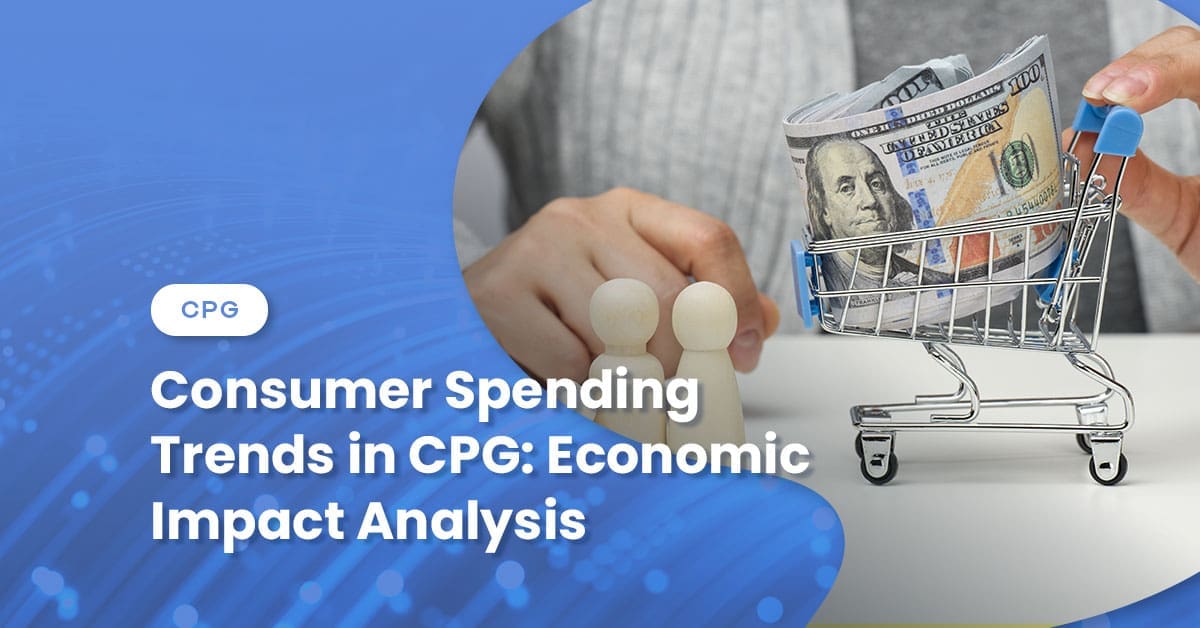
- Consumer spending accounts for approximately 70% of U.S. GDP, which means that when spending behavior shifts even modestly, the downstream impact on consumer goods companies is not modest at all.
- The pricing playbook that worked from 2021 through 2023, raising prices to offset cost increases and holding volume, is substantively over. Consumers have reached a point of resistance, and the companies still modeling revenue growth primarily through price are building forecasts on a mechanism that has run out of room.
- Tariff-driven cost increases on imported ingredients, packaging, and finished goods are landing on CPG companies at precisely the moment when their ability to pass those costs forward is most constrained.
- The channel mix shift toward private-label and discount formats is not a temporary consumer response to inflation. It reflects a durable change in purchase behavior for a meaningful segment of the market that warrants structural reassessment of pricing architecture and channel strategy.
- Bottom line: The CPG companies that manage through this environment effectively are the ones whose financial infrastructure can model volume, price, mix, and cost simultaneously — not just react to margin compression after it appears on the P&L.
For most of the post-pandemic period, CPG companies had an unusual ally: consumers who were willing to pay higher prices. That willingness funded margin recovery, absorbed supply chain cost increases, and let companies report revenue growth that obscured the fact that volume was frequently flat or declining. The story looked good in the headline and complicated in the details.
That dynamic has meaningfully shifted. Consumer spending patterns in early 2026 reflect a population that has absorbed cumulative price increases across multiple years, faces ongoing tariff-driven price pressure on many consumer categories, and is increasingly making deliberate trade-down decisions. For CPG CFOs and business owners, the relevant question is not whether this is happening. It is about the financial models, cost structures, and pricing strategies that were built for a different environment.
The Pricing Power Ceiling Is Real, and CFOs Should Stop Arguing With It
Consumer price elasticity is not a theory. It is a behavioral reality that first shows up as unit volume declines, then as basket size reductions, then as channel migration, and finally as outright category abandonment. U.S. consumption accounts for approximately 70% of gross domestic product, making consumer behavior both economically central and highly consequential for companies whose revenue depends on it.
The companies that passed through cost increases most aggressively in 2021 and 2022 benefited from consumers with pandemic-era savings and limited alternatives. That consumer has changed. Pandemic savings have largely been drawn down. Credit card balances have risen. Real wage growth, while positive, has not fully offset cumulative inflation in essential categories. The consumer who accepted a 12% higher price on a staple product two years ago is now actively looking at the shelf below it.
For CPG manufacturers, this translates directly into gross margin pressure from a different direction than cost inflation. It is revenue-side compression. Price increases are no longer flowing through at the same acceptance rate, promotions are being required to defend velocity, and the net realized price per unit is softening even when the list price has not changed.
The financial planning implication is that revenue forecasts built on continued price-realization assumptions need to be stress-tested against a volume-and-mix scenario in which consumers continue trading down. A model that shows flat revenue from higher prices while volume declines 5% is not a plan. It is an optimistic assumption dressed as analysis.
Tariffs Are Compounding a Problem That Already Existed
Elevated tariff rates on goods sourced from major manufacturing countries, including China, have added a meaningful cost headwind for CPG companies already facing a difficult pricing environment. The two problems arrive simultaneously and interact in ways that compound each other.
A CPG company that sources packaging from Chinese suppliers, uses imported ingredients, or manufactures finished goods offshore is absorbing tariff-related cost increases on the input side while its ability to recover those costs through pricing is constrained by consumer resistance. The historical playbook, absorb costs then pass them through on the next pricing round, requires that there be a next pricing round that the consumer will accept. That assumption is currently fragile.
As Wiss observed in our analysis of current tariff impacts, corporations face a more persistent challenge than consumers in the current environment: supply chain disruptions coupled with dwindling pricing power are a combination harder to manage than either variable alone. A consumer retains the flexibility to shift spending patterns. A CPG manufacturer with long-term supplier agreements, retailer contracts, and manufacturing commitments has significantly less maneuverability.
The financial response to this situation must occur on both sides of the income statement simultaneously. Cost structure reduction, supply chain restructuring to reduce tariff exposure where possible, and promotional investment strategy all need to be part of the analysis. Treating tariff costs as a temporary pass-through in the next pricing conversation is a planning error if the market environment does not support that pass-through.
Channel Mix Shift and What It Means for Financial Modeling
One of the most significant structural changes in CPG over the past two years has been the durable acceleration in private label market share across multiple categories. Consumers who traded into private label in response to inflation in 2022 and 2023 have not uniformly traded back out as inflation has moderated. For a meaningful share of the population, the perceived quality gap between national and store brands has narrowed sufficiently that the economic rationale for returning to premium pricing is no longer compelling.
This has two financial implications that CPG companies need to build into their models rather than treat as temporary noise. First, the volume assumption for branded products in categories with strong private-label penetration needs to be revised downward on a structural basis, not only in adverse scenarios. Second, the channel mix within branded sales is shifting toward formats such as club, value, and discount retailers, where the margin profile differs meaningfully from that of traditional grocery and mass channels.
A company whose revenue model assumes a stable mix between high-margin retail accounts and lower-margin club or off-price formats will consistently overestimate blended gross margin if that mix is actually shifting. The financial infrastructure needs to track channel mix as a margin driver, not just a revenue line.
Scenario Planning Is Not Optional in This Environment
The combination of consumer spending pressure, tariff cost headwinds, and a shift in channel mix creates an operating environment in which the range of plausible financial outcomes for a CPG company over the next 12 to 18 months is genuinely wide. A CFO whose annual plan includes a single revenue and margin projection, without explicit scenario analysis around volume decline, price realization shortfall, and cost escalation, is operating with an information deficit.
Effective scenario planning in the current environment models at least three versions of the business: a base case that reflects current trends continuing, a stress case that assumes further softening in consumer demand and continued tariff cost pressure without pricing relief, and an upside case that assumes some recovery in consumer confidence and normalization of the pricing environment. Each scenario should flow through to the income statement, balance sheet, and cash flow statement so that the liquidity implications of each are visible before they arrive.
What Financial Clarity Looks Like When the Environment Is Uncertain
Wiss works with CPG companies to build financial planning and analysis capabilities that match the complexity of the operating environment their businesses actually face. That includes scenario modeling that connects consumer trend assumptions to P&L outcomes, channel mix analysis that surfaces margin implications of distribution shifts, and cost structure assessment that separates structural from cyclical headwinds. If your current planning process is not providing the visibility you need to make confident decisions in this environment, contact Wiss to discuss what a more responsive financial infrastructure would look like for your business.
 Previous


Share


Related Posts
CPG Financial Reporting Automation: Reducing Month-End Close Time
June 26, 2026
Flavor Profitability Analysis for Food Companies: Rationalizing Your Portfolio
June 24, 2026
Pet Services Accounting: Why Subscription Revenue Models Fail
June 19, 2026
Fitness Bar Company Accounting: Co-Packing vs In-House Production
June 17, 2026