
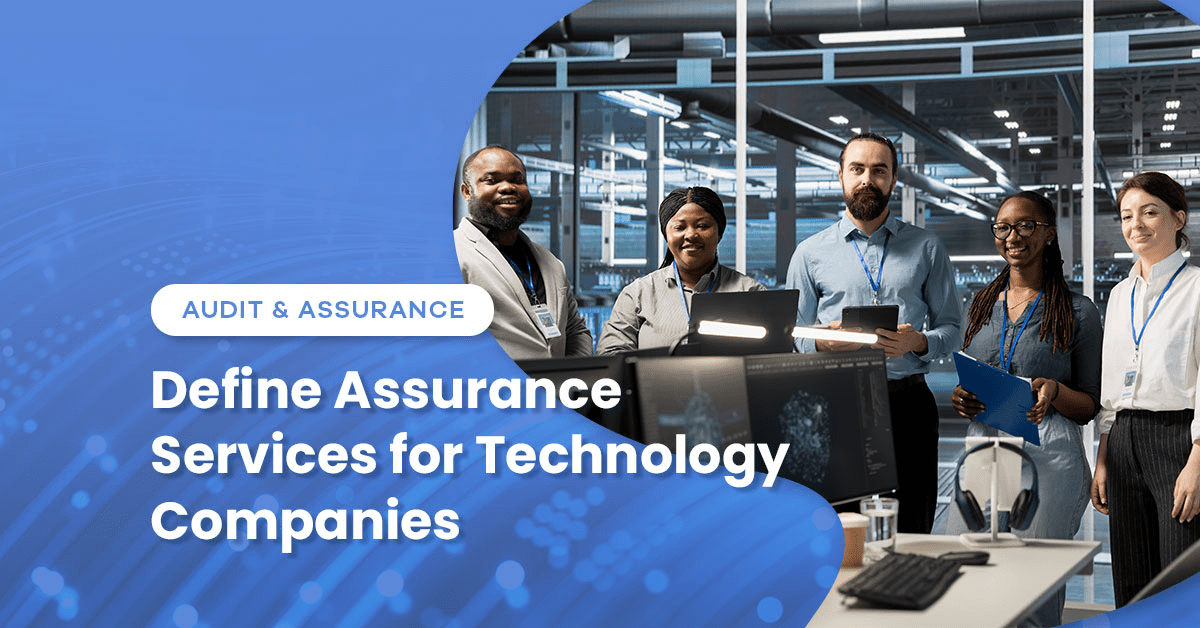



Key Takeaways
- Independent verification builds trust: Assurance services provide objective examination of financial statements and internal controls that investors and customers demand
- Tech-specific expertise matters: SaaS revenue recognition, software capitalization, and stock compensation require specialized knowledge generic auditors lack
- Beyond compliance: Modern assurance includes SOC reports and control assessments that enable enterprise sales and fundraising
- Bottom Line: Technology CFOs need assurance partners who understand platform architectures and investor expectations—not just accountants checking boxes
Your investors demand audited financials. Enterprise customers require SOC 2 reports before signing contracts. Lenders won’t extend credit without independent verification. Acquirers conduct intensive due diligence on your accounting practices.
Welcome to assurance services—the independent examination that makes stakeholders trust your numbers.
What Assurance Services Actually Are
Assurance includes independent professional services that improve the quality and credibility of information used for decision-making. Assurance providers—typically CPA firms—examine your financial statements, internal controls, and business processes, then issue reports expressing conclusions about their reliability.
The defining characteristic? Independence. Assurance providers maintain objectivity separate from management and report their findings honestly, regardless of whether the conclusions favor the company.
For technology CFOs, assurance services encompass financial statement audits, internal control assessments, SOC reports for security and data protection, agreed-upon procedures on specific metrics, and compliance audits examining adherence to regulations or contractual obligations.
Why Technology Companies Need Assurance Services
Venture capital firms and private equity investors require audited financial statements before committing capital. Unaudited financials prepared by internal teams lack credibility with sophisticated investors who’ve seen creative accounting mask underlying problems. Series B and later funding rounds typically require audited financials for the prior year. Growth equity investors expect audit opinions before closing transactions. Public market preparation absolutely demands a clean audit history.
Enterprise customers increasingly require SOC 2 Type II reports before purchasing SaaS solutions. They need assurance that vendors maintain appropriate security controls, protect customer data properly, and follow established operational procedures. Without SOC 2 reports, technology companies lose enterprise sales opportunities to competitors providing assurance documentation. Large customers won’t accept vendor assertions about security—they demand independent verification.
Banks and other lenders require audited financial statements for credit facilities, equipment financing, and venture debt. Loan covenants often reference audited figures. Lenders won’t extend significant credit based solely on management-prepared statements.
Companies considering exits need clean audit histories. Acquirers conduct intensive due diligence, examining financial statements, revenue recognition policies, internal controls, and accounting practices. Prior audit deficiencies create valuation concerns and deal complications. Starting audits early—before contemplating exits—eliminates fire drills when acquisition opportunities emerge.
Technology-Specific Assurance Challenges
SaaS revenue models challenge standard audit approaches. Usage-based pricing, consumption models, multi-element arrangements, and professional services bundled with software require auditors who understand the nuances of ASC 606 specific to technology companies. Auditors examine revenue cutoff procedures, deferred revenue calculations, contract review processes, and the accuracy of system-generated billing.
Software development capitalization requires judgment about which costs qualify for capitalization versus immediate expense. Auditors assess whether your development-stage definitions comply with GAAP, verify cost allocations between research and development phases, and test amortization calculations.
Stock-based compensation creates complex accounting for employee equity grants. Auditors verify grant-date fair-value calculations, vesting-schedule tracking, expense recognition timing, and disclosure completeness for equity awards.
Reliability of platform-generated data becomes critical when internally built systems handle billing, usage tracking, and revenue calculation. Auditors assess data flows from platforms to accounting systems, evaluate user access controls and segregation of duties, test program change management procedures, and examine the effectiveness of automated controls.
What Wiss Assurance Provides
Technical Accounting Expertise: Our team specializes in the complexities of technology industry accounting, including revenue recognition for SaaS and usage-based models, software capitalization assessments, stock compensation valuations, and debt and equity financing accounting.
Audit Readiness Support: We prepare you before audits begin by drafting accounting policy memos, identifying control gaps, preparing workpapers and reconciliations, reviewing technical accounting positions, and assisting with financial statement preparation.
Internal Control Assessments: We evaluate control design and effectiveness, document control environments, test operating effectiveness, identify material weaknesses, recommend improvements, and support SOX compliance preparation.
SOC Report Facilitation: We guide companies through SOC examinations by assessing SOC 2 Type II readiness, identifying control gaps prior to the examination, coordinating with SOC auditors, and streamlining evidence gathering.
Transaction Support: We assist with M&A and fundraising by responding to due diligence requests, addressing buyer accounting questions, supporting quality-of-earnings analyses, and providing technical accounting guidance during transactions.
How Wiss Delivers Value
Our team includes professionals with deep experience in the technology industry. We understand SaaS metrics, platform architectures, and investor expectations. We speak your language—not generic audit terminology that creates confusion.
We work as an extension of your finance team, not distant auditors who appear annually to request documents. You maintain direct access to experienced professionals who understand your business model and respond quickly when issues emerge.
Our approach leverages technology and streamlined processes that minimize audit disruption. We communicate clearly about timing and requirements, provide organized document request lists, use technology-enabled evidence-gathering, and identify issues proactively rather than surprise you at year-end.
Beyond audit opinions, we provide insights that matter. We benchmark your practices against technology industry peers, identify operational efficiency opportunities, recommend control improvements to support growth, and advise on technical accounting matters that affect strategic decisions.
Key Considerations for Tech CFOs
Technology companies typically engage assurance services when preparing for Series B+ funding rounds, pursuing enterprise customers demanding SOC 2 reports, seeking debt financing, contemplating exits, or experiencing rapid growth that strains internal control environments.
Core assurance services technology companies need:
- Financial statement audits provide investor confidence
- SOC 2 Type II reports enabling enterprise sales
- Internal control assessments supporting growth and compliance
- Technical accounting guidance on revenue recognition and software capitalization
- Transaction support for fundraising and M&A activities
Start earlier rather than later. First-year audits take longer than subsequent years as auditors establish a baseline understanding. Early engagement prevents fire drills when time-sensitive opportunities emerge. Three years of clean audits demonstrate financial discipline that supports premium valuations during exits.
Ready to discuss your assurance needs? Contact Wiss to explore how our technology industry expertise supports your strategic objectives.
 Previous

Share


Related Posts
How Manufacturing CFOs Should Select Auditors Who Actually Understand Your Business
January 26, 2026

Define Auditor: Independence in Real Estate Transactions
December 18, 2025

Internal Controls for Real Estate Companies
December 16, 2025
Define Assurance Services for Technology Companies
December 1, 2025