Tesla Begins Solar Panel Manufacturing in Buffalo
February 4, 2026
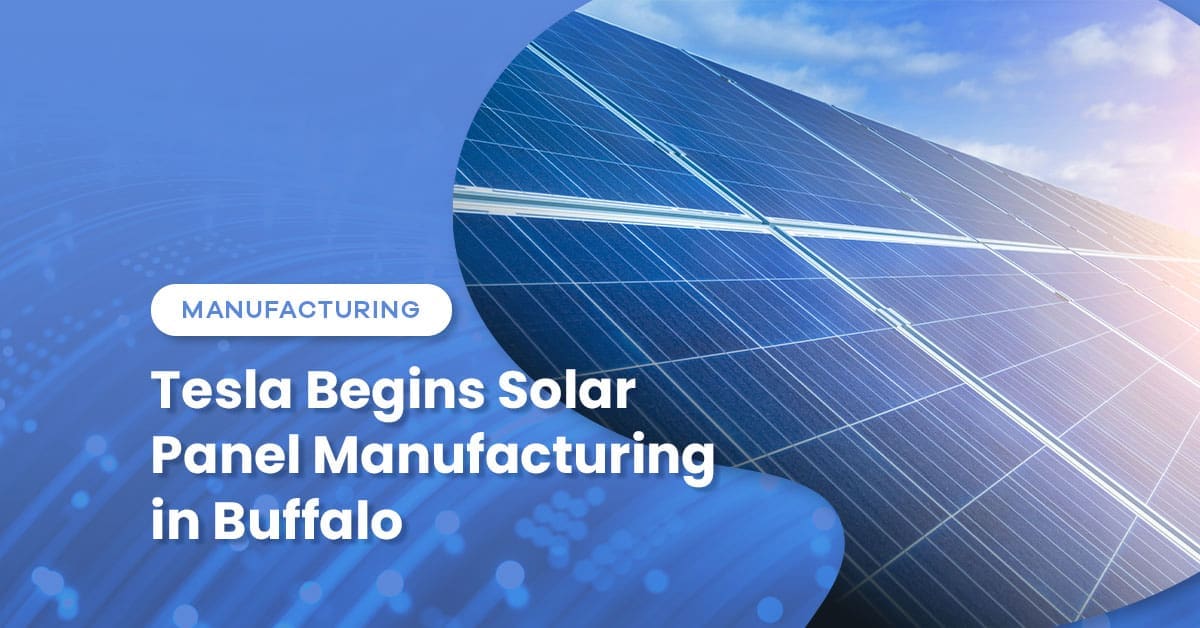


Tesla started producing residential solar panels at its Gigafactory New York in Buffalo, with first deliveries expected in Q1 2026. The timing coincides with surging residential solar demand driven by the planned expiration of the 30% federal solar tax credit—a policy shift creating urgency among homeowners considering solar installations.
The Specifications
Tesla updated its solar panel specifications from 405 watts to 410 watts, closely matching Hanwha Qcells’ Q.PEAK DUO ML-G10+ model ratings. Whether these specifications apply specifically to the Buffalo-manufactured panels remains unclear, as Tesla hasn’t released detailed technical documentation for the new production line.
The move marks a departure from Tesla’s previous manufacturing arrangements, which relied on Panasonic-produced panels or on rebranded Hanwha panels. During the Q3 earnings call, Tesla confirmed that residential solar panel production had begun in Buffalo, establishing the company’s first in-house solar manufacturing operation.
The Business Context
Tesla had significantly scaled back its solar business in recent years, with deployments falling low enough that the company paused separate reporting of solar metrics. The reversal comes as the company attempts to revive the segment by relaunching its solar leasing product earlier this month.
The leasing model addresses a primary barrier to residential solar adoption: upfront cost. By allowing homeowners to install panels with little or no money down and pay monthly lease payments instead, Tesla removes the capital requirement that prevents many households from considering solar.
The federal tax credit creates additional motivation. At 30%, the credit represents substantial savings for homeowners who purchase systems outright. Its planned elimination creates a deadline effect, concentrating demand into a compressed timeframe—exactly the conditions that make manufacturing scale-up viable.
What This Means for Buffalo
Gigafactory New York has faced scrutiny over its economic impact since opening. Originally announced with ambitious job creation projections, the facility hasn’t consistently met employment targets that were conditions of the substantial state incentives package that funded construction.
Solar panel manufacturing provides measurable employment in a sector with demonstrated growth potential, at least in the near term. The question is whether demand sustains beyond the tax credit deadline or whether Tesla is scaling production to capture a temporary surge that collapses once the policy incentive expires.
Manufacturing jobs in Buffalo represent a departure from the region’s historical economic base, which centered on heavy industry and steel production. Solar panel production requires different skill sets—more aligned with electronics assembly than traditional manufacturing—but offers comparable wage potential without the environmental impacts of heavy industry.
The Competitive Landscape
Hanwha Qcells’ Q.PEAK DUO ML-G10+ model serves as the comparison point for Tesla’s new panels. That Hanwha previously supplied panels that Tesla rebranded suggests the companies maintained a supplier relationship that Tesla is now replacing with in-house production.
The competitive implication: Tesla believes it can manufacture panels at comparable quality and cost-efficiency to established solar manufacturers, while maintaining control over supply chain, specifications, and margins. Whether that belief proves accurate will determine if Buffalo production continues after the initial demand surge.
Residential solar markets are intensely price-competitive. Installation costs, panel efficiency, warranty terms, and financing options all factor into purchase decisions. Tesla’s brand recognition provides marketing advantages, but homeowners making five-figure investments tend to carefully compare specifications.
Policy-Driven Market Dynamics
The 30% federal solar tax credit isn’t a minor policy detail—it’s been the primary driver of residential solar adoption since its implementation. Its planned elimination represents a fundamental shift in the market.
Some analysts project demand will collapse post-credit, while others argue falling panel costs and rising electricity rates make solar increasingly viable without subsidies. Tesla is effectively betting on sustained demand, or at least a sufficient near-term surge to justify manufacturing infrastructure.
For New York specifically, the state maintains additional solar incentives beyond the federal credit, including net metering policies that credit homeowners for excess power fed back to the grid. These state-level policies may cushion the impact of federal credit elimination, maintaining baseline demand for Buffalo-manufactured panels.
The Economics of Scale
Solar panel manufacturing requires substantial capital investment in equipment and facilities. Tesla inherited much of that infrastructure through the Gigafactory New York arrangement, but retooling for in-house production still represents significant expenditure.
The economics work only if Tesla can achieve production volumes that spread fixed costs across enough units to compete on price with established manufacturers. The tax credit deadline concentrates demand precisely when Tesla needs volume to justify production costs—convenient timing that may be entirely strategic.
What happens in Q2 2026 and beyond matters more than Q1 deliveries. If demand sustains, Buffalo production represents a genuine economic development success. If it collapses post-credit, the facility becomes another example of policy-dependent manufacturing that disappears when incentives expire.
Manufacturing Tax Incentives & Economic Development Advisory
Policy-driven manufacturing expansions create complex tax planning opportunities and economic development considerations. Wiss’s Manufacturing and Economic Development Advisory teams help companies navigate federal and state incentive programs, structure operations for optimal tax treatment, and plan for policy transition scenarios.
Whether you’re evaluating manufacturing investments affected by expiring tax credits or assessing compliance with economic development incentives, our team provides strategic tax and advisory services.
Contact Wiss Tax & Advisory Services to discuss your business growth strategy.
Editorial Note: This article provides general information about manufacturing developments and tax policy changes. It does not constitute investment, tax, or business advice. Companies considering manufacturing investments or evaluating tax credit impacts should consult with qualified tax and business advisors. Wiss & Company LLP provides accounting, tax, and advisory services to manufacturing companies, economic development organizations, and businesses navigating policy transitions in New York and nationally.
 Previous


Share


Related Posts

2026 Manufacturing Technology Trends Every CFO Should Know
April 10, 2026
Smart Manufacturing Technology ROI: A CFO’s Investment Guide
April 8, 2026

IRS Issues Guidance on 100% Depreciation for Production Facilities
March 30, 2026
Manufacturing ERP Software: Selection and Implementation Guide
March 27, 2026