


“With COPA in place, readiness matters. Nonprofits that pair mission with operational discipline will be best positioned to navigate the process effectively.”
– Diana Miller, Partner, Not-For-Profit, Wiss
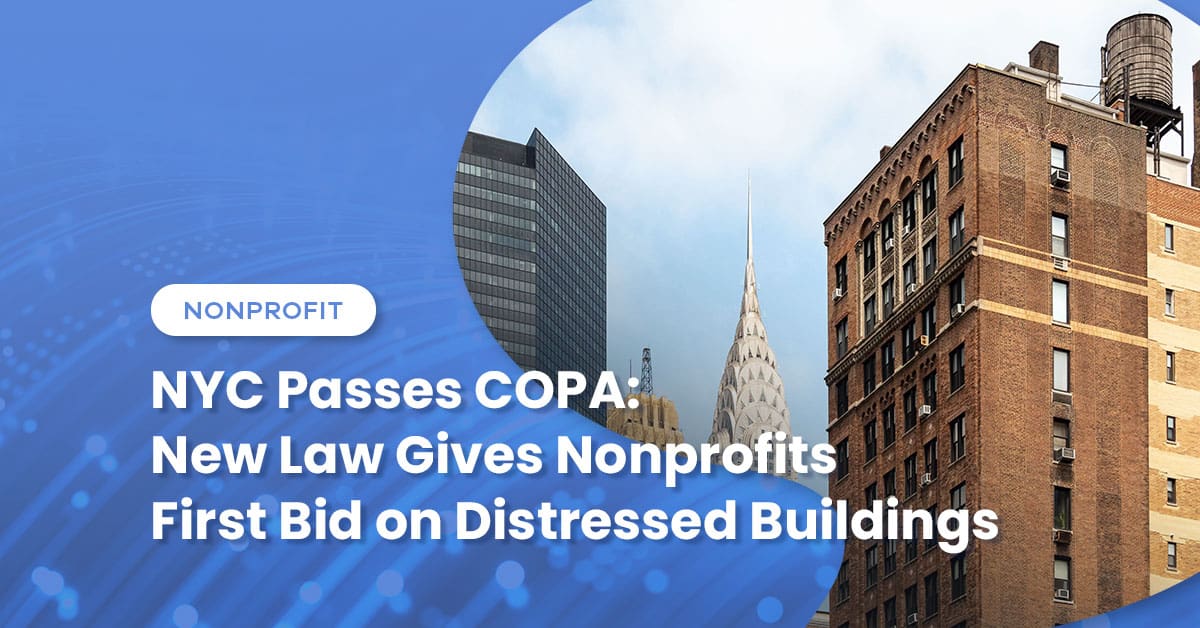
The New York City Council passed the Community Opportunity to Purchase Act (COPA) in December 2025, marking a significant shift in how certain residential properties change hands in the city. Five years in the making, the legislation has property owners and nonprofit housing groups preparing for a new reality in the city’s already competitive real estate market.
What COPA Actually Does
Here’s what matters: If you own a residential building with at least four units that falls into specific categories—those enrolled in Alternative Enforcement programs, properties with serious housing violations, or buildings with expiring affordability restrictions—you’ll need to notify both the city and a list of “qualified entities” before selling.
These qualified entities, primarily nonprofits with proven property management track records, get 25 days to express interest and 80 days to make an offer. No interest? The property hits the open market. But if a nonprofit does make an offer and you reject it, they retain a “right of first refusal” to match any subsequent offer you accept within 15 days.
The bill phases in gradually. Year one targets properties in the worst shape—those already costing the city significant enforcement resources. Year two expands to buildings with at least one hazardous violation per unit.
The Real Estate Pushback
Property owner groups haven’t held back their criticism. The Small Property Owners of New York argues the legislation creates “serious timing risk” for distressed owners who need to sell quickly to avoid foreclosure. Real estate groups deployed a digital billboard near City Hall calling COPA “corruption” and claiming it would raise rents.
Their core argument: giving nonprofits an exclusive purchasing window artificially devalues properties and disadvantages private buyers. Ann Korchak of SPONY called it “privileged access that no ordinary buyer is afforded.”
The Nonprofit Perspective
Council Member Sandy Nurse, who sponsored the revised version, sees COPA as a preservation tool. “We want to try to keep those units affordable,” she said at the bill’s passage. Without it, she argued, the city risks losing affordable housing stock to investors with no interest in maintaining affordable rents.
Supporters point to existing models like the Cooper Square Community Land Trust, where tenant groups successfully transitioned buildings to community ownership. They argue COPA works alongside existing city programs like Neighborhood Pillars, which provides low-interest loans for nonprofit property acquisition and renovation.
What Happens Next
The revised COPA exempts owner-occupied buildings with five or fewer units and vacant lots—a concession to concerns about burdening small landlords. Properties with fewer than four apartments are also exempt.
The Department of Housing Preservation and Development will establish the list of qualified entities, setting benchmarks for nonprofit experience in property management and affordable housing preservation.
For property owners navigating distressed assets, COPA adds another layer to exit strategy planning. For nonprofits, it creates a structured pathway to acquire buildings they might otherwise lose to better-capitalized buyers.
The question isn’t whether COPA represents government overreach or needed intervention—that debate’s already polarized. The question is how it works in practice once properties start moving through this new system.
Need Strategic Tax & Real Estate Advisory? Navigating NYC property regulations requires more than compliance—it requires strategy. Wiss’s Real Estate and Tax Advisory teams help property owners and investors structure deals that actually work. Contact us to discuss your portfolio.
Editorial Note: This article provides general information about NYC legislation and does not constitute legal, tax, or investment advice. Property owners should consult with qualified legal and tax advisors regarding specific situations. Wiss & Company LLP provides accounting, tax, and advisory services to real estate investors and property owners in the New York metropolitan area.
 Previous


Share