
Employee Retention Strategies for Construction Companies
March 13, 2026




Key Takeaways
- Turnover is a measurable line item: Industry estimates consistently place the fully-loaded cost of replacing a skilled trades employee at 50–200% of their annual wages, accounting for recruiting, onboarding, productivity loss, and increased error rates during transition periods.
- Benefits quality is evaluated — not just acknowledged: Construction workers assess health plan deductibles, prescription coverage, and retirement match rates with the same scrutiny they apply to base wage offers. A weak benefits package is a retention liability, whether or not anyone says so out loud.
- Incentive plan design determines whether people stay or just cash checks: Profit-sharing and performance bonuses only function as retention tools when the formula is transparent, the payment timing is credible, and the amount is material enough to influence decisions.
- The tax treatment of your retention investments matters: Properly structured retirement plan contributions, deferred compensation arrangements, and certain fringe benefits are deductible. Owners who haven’t reviewed their compensation structures recently are likely leaving tax efficiency on the table.
- Bottom Line: Employee retention in construction is a financial discipline. The owners who staff their best projects with their best people have designed compensation and culture systems that make leaving costly — and staying worthwhile.
The construction labor market doesn’t give anyone the benefit of the doubt. If your competitors are offering more money, better benefits, steadier hours, or a clearer future, your people will find out — and some of them will leave. That’s not a management failure. That’s the market functioning exactly as designed.
What separates construction companies that retain skilled workers from those constantly backfilling projects isn’t luck — and it isn’t just culture. It’s a deliberate, financially grounded approach that treats workforce stability as a business asset and turnover as a measurable cost.
Here’s what that looks like in practice.
Know Your Actual Turnover Cost Before You Decide What Retention Is Worth
Construction owners routinely underestimate the cost of turnover. The visible costs — job postings, recruiter fees, onboarding hours — are a small part of the number. The larger portion is the cost of reduced productivity during the gap period, the cost of rework generated by inexperienced replacements, the cost of supervisory time diverted to training rather than managing active projects, and the incremental risk exposure on jobs where institutional knowledge walked out the door.
When you model turnover as a true loaded cost rather than a simple replacement expense, the math changes. A journeyman electrician earning $75,000 who leaves mid-project can generate a total transition cost of $37,500 to $150,000 when you account for all of the above. At that number, a $4/hour wage increase to retain him — approximately $8,000 per year — is not a labor cost increase. It’s a net positive return on a straightforward retention investment.
This framing matters because it reframes the budget conversation entirely. Retention spending is not a cost center line item. It is a capital allocation decision with a calculable ROI. Owners who don’t model it that way are making compensation decisions without the complete financial picture.
Compensation Architecture: More Than the Hourly Rate
Competitive base wages are the floor, not the ceiling. If you’re not paying market rates for your trade and geography, every other retention strategy you implement is a patch on a structural problem. Robert Half’s Construction Salary Guide and regional prevailing wage data provide reasonably current benchmarks — and your competitors’ job postings tell you what they’re advertising to your employees right now.
But assuming your base wages are competitive, the architecture around that base wage is where your retention differentiation actually lives.
Overtime predictability and scheduling stability matter more than most owners realize. Construction workers often accept that the work is physically demanding and weather-dependent. What drives turnover more frequently is chaotic, inconsistent, or regularly disruptive scheduling that disrupts personal and family commitments without warning or compensation. Owners who build scheduling systems that provide reasonable advance notice and consistent weekly hours — even when that requires more deliberate project staffing — retain workers at higher rates than those who treat the schedule as a fluid variable.
Tool and equipment allowances are a practical, low-cost retention signal in the trades. Workers who supply their own tools evaluate their employer’s commitment to their success partly through whether the company provides, maintains, and replaces the equipment needed to do the job well. This is a loyalty signal that registers disproportionately to its actual cost.
Shift differentials and hazard pay for projects involving conditions outside standard scope — height, confined space, hazardous materials, night work — demonstrate that the company prices risk fairly and doesn’t treat extraordinary demands as simply part of the job. Workers notice when they don’t exist.
Benefits Design: Where Retention Is Won or Lost Quietly
Benefits are evaluated quietly and constantly. Your employees are comparing your health plan deductibles to their brother-in-law’s plan, your 401(k) match to what they read the industry average is, and your PTO policy to what they got offered in that recruiting call last month.
Health insurance is the most evaluated benefit in the trades. Workers with families are paying specific attention to deductibles, out-of-pocket maximums, and provider networks. A high-deductible plan may save the company money on premiums, but if your employees are choosing between seeing a doctor and covering a deductible, that plan is functioning as a compensation reduction—and they know it. The total compensation picture includes what they pay for coverage, not just what they receive in wages.
Retirement plan design deserves active attention, not set-it-and-forget-it administration. A 401(k) with a meaningful employer match — structured with a vesting schedule of two to four years — creates a financial disincentive to leave that compounds over time. An employee who is two years into a three-year vesting schedule is not merely satisfied with their current employer. They have a specific, calculable financial reason to stay. That is the function of a well-designed retirement plan.
The SECURE 2.0 Act, signed into law at the end of 2022, introduced several provisions relevant to construction employers, including enhanced tax credits for small businesses starting new retirement plans, provisions incentivizing automatic enrollment, and changes to catch-up contribution limits. Owners who have not reviewed their plan structure since SECURE 2.0 took effect may be missing available tax incentives and failing to capture the full retention value of their retirement benefit.
Paid time off, including sick leave and parental leave, has moved from a differentiator to a baseline expectation across the construction workforce — including in the trades. Owners who treat PTO as a cost to minimize rather than a benefit to design thoughtfully are making themselves easier to recruit against.
Incentive Pay: Design It to Retain, Not Just Reward
Profit-sharing and project-based bonus programs are among the most effective retention tools available to construction owners — and among the most frequently designed in ways that don’t actually retain anyone.
The failure modes are consistent. The formula is opaque, so workers don’t believe the number is calculated fairly. The payment is annual and discretionary, so it functions as a surprise gift rather than an earned outcome. The amount is too small to influence a job-change decision. Or the program applies only to project managers and above, leaving the field crews — your highest-turnover population — entirely outside it.
An incentive program that retains people has four non-negotiable characteristics. The formula must be specific and documented — workers should be able to calculate their own expected payout. Payment timing must be credible and reasonably proximate to the performance period — annual programs paid in February for the prior year are substantially less motivating than quarterly programs paid within 60 days of period close. The amount must be material — a $500 annual bonus does not influence a resignation decision. And eligibility must extend to the workforce you actually need to retain — which in construction typically means field workers, foremen, and superintendents, not only office staff.
On the tax side, properly structured profit-sharing contributions to qualified retirement plans are deductible under IRC Section 404 up to 25% of aggregate eligible payroll. Non-qualified deferred compensation arrangements can be structured to defer income recognition for key employees under IRC Section 409A, subject to specific compliance requirements that must be satisfied to avoid immediate income recognition and a penalty tax. These are not HR decisions in a vacuum. They are compensation structure decisions with direct tax implications that warrant coordination with your tax advisor.
Culture and Site Leadership: The Multiplier Nobody Talks About
Every compensation and benefits strategy described above is undermined by poor site culture. Workers don’t leave companies. They leave supervisors and work environments. If your foremen treat crews poorly, if safety is a compliance exercise rather than a genuine priority, if field workers feel disposable regardless of what the handbook says, the benefits package doesn’t matter enough to compensate.
Construction owners who retain the best people have typically invested in their supervisory bench: training foremen and superintendents in management skills that don’t get covered in the trades, establishing clear standards for how crews are treated on site, and holding supervisors accountable for the turnover rates under their leadership.
The turnover rate for each superintendent or project manager is a metric worth tracking explicitly. It reveals where the retention problem actually lives — and whether it’s a compensation issue, a culture issue, or a specific leadership issue — with a precision that aggregate company-wide numbers don’t provide.
The Advisory Perspective: Retention Strategy Has a Financial Architecture
The most effective retention strategies in construction aren’t standalone HR initiatives. They are coordinated compensation systems, tax structures, and incentive frameworks — all with measurable financial impact.
At Wiss, our advisory practice works with construction owners to evaluate total compensation structures, optimize retirement and incentive plan design, identify available tax deductions associated with workforce investment, and build the kind of employee economics that make retention a competitive advantage rather than a persistent problem.
If your turnover rate is higher than you’d like — or if you haven’t reviewed your compensation architecture recently and aren’t certain it’s optimized — that’s the right conversation to have before the next foreman hands in his notice.
Contact the Wiss Construction Practice Team to discuss how our advisory services can help you design a retention strategy that lasts.
 Previous


Share


Related Posts

Data Centers Are Raising Neighborhood Temperatures, New Research Shows
June 12, 2026

Calculated Industries Adds AI Assistant to CMPro App
June 12, 2026

World Cup 2026 NJ Construction Boom: What Contractors Need to Know
June 11, 2026
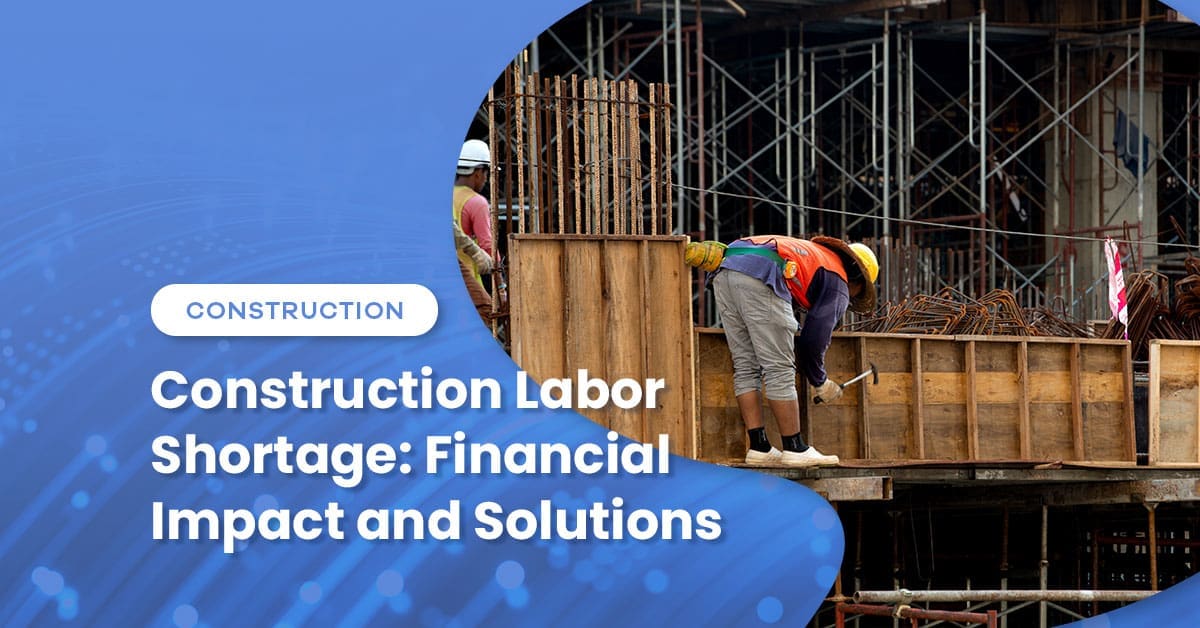
Construction Labor Shortage: Financial Impact and CFO Responses
May 29, 2026