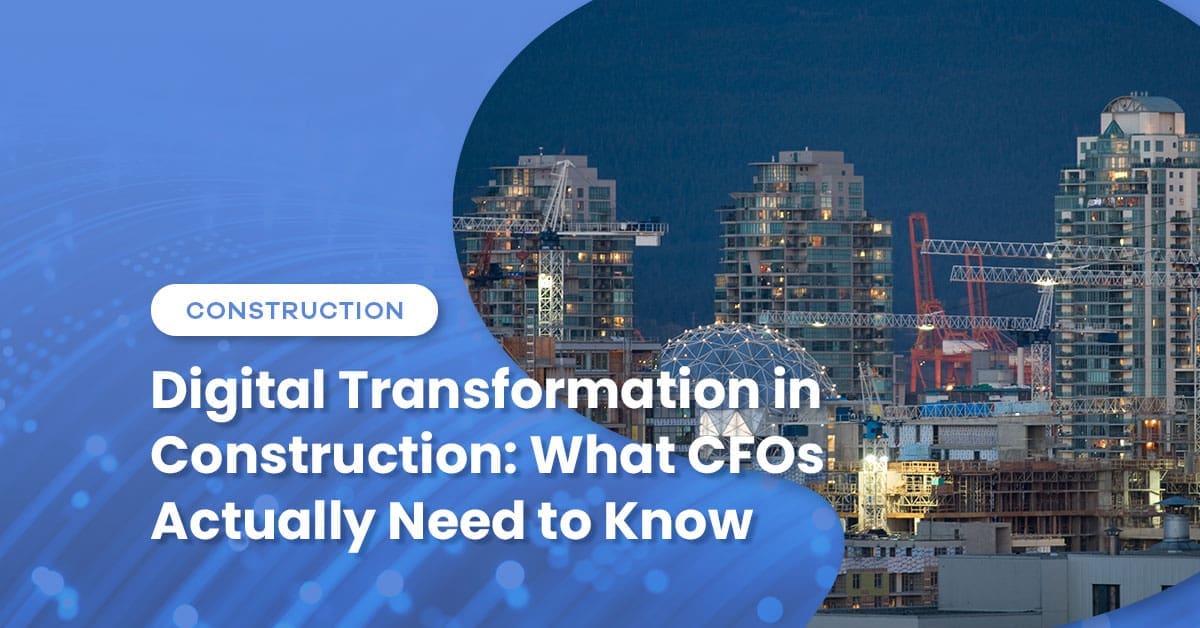
Digital Transformation in Construction: What CFOs Actually Need to Know
February 9, 2026


Let’s address the elephant in the room: “digital transformation” has become the business equivalent of “synergy”—a term consultants love and executives have learned to distrust. But strip away the buzzword, and there’s a legitimate question worth answering: How do you modernize construction operations without lighting money on fire?
Construction CFOs face a peculiar challenge. Your project managers want drones and AI. Your field supervisors still use paper timesheets. And you’re supposed to figure out which technology investments will actually improve margins versus which ones just make expensive PowerPoint slides.
Key Takeaways
- Integration failures between new and legacy systems create unexpected costs that often exceed initial implementation budgets
- Successful modernization focuses on financial visibility improvements rather than adopting technology for technology’s sake
- Bottom Line: Digital investments should solve specific financial problems—improved job costing accuracy, faster billing cycles, better cash forecasting—not check boxes on a modernization roadmap.
The Real Cost of Doing Nothing (And Why Most Estimates Are Wrong)
Every technology consultant will tell you that staying with legacy systems costs more than upgrading. They’re not entirely wrong, but they’re calculating it incorrectly.
The actual cost isn’t about efficiency—it’s about visibility. When your financial data lives in disconnected systems, you’re making capital allocation decisions based on information that’s weeks old. You’re bidding new work using labor cost assumptions that stopped being accurate two years ago. You’re managing cash flow with receivables data that requires three people and two days to reconcile.
But here’s what the consultants won’t mention: Bad technology implementations create worse visibility than old systems. At least with your current setup, your team knows the workarounds. New software that doesn’t integrate properly? That’s expensive chaos.
Integration: The Unsexy Thing That Determines Success or Failure
Technology vendors love talking about features. You need to care about connections.
The construction tech landscape resembles a nightmare org chart: project management software, accounting systems, estimating tools, time-tracking apps, equipment management platforms, and subcontractor portals. Each one promises to be your “single source of truth.” None of them talks to each other without significant effort.
Real integration costs manifest in three ways: Initial implementation expenses (which vendors always underestimate), ongoing maintenance as systems update (which nobody mentions until year two), and the human cost of managing disconnected data (which never appears in any ROI calculation).
Before approving any technology investment, map the integration requirements. Not the vendor’s flowchart showing how systems “can” connect—the actual data flows your team needs. If the answer involves phrases like “custom API development” or “middleware solution,” assume materially higher cost and longer timelines, often far beyond initial vendor estimates.
Job Costing Accuracy: Where Technology Actually Moves the Needle
Construction profitability lives or dies on job costing accuracy. Not estimate accuracy—that’s a different problem. Job costing accuracy means knowing what you’re actually spending on each project while there’s still time to fix problems.
Legacy approaches to job costing involve weekly or monthly updates, manual allocation of indirect costs, and labor tracking that relies on field supervisors remembering who worked where three days ago. By the time you realize a job’s margin has deteriorated, you’ve usually spent the profit trying to fix issues you should have caught weeks earlier.
Modern job costing technology—when implemented correctly—provides daily visibility into cost accumulation, automates labor burden allocation based on actual rates rather than estimates, and flags variance issues before they become margin problems. The ROI isn’t “better efficiency.” It’s catching the small problems before they become expensive disasters.
Cash Flow Forecasting: Your Highest-Value Use Case
Construction cash flow management involves predicting three different timelines: When you’ll complete billable work, when you’ll actually submit invoices, and when clients will actually pay you. Add in retainage, change order disputes, and subcontractor payment obligations, and you’re juggling more variables than most CFOs want to admit.
Technology that improves cash forecasting accuracy delivers immediate value. Better visibility into billing status across multiple projects, automated tracking of payment application timing based on historical patterns, and retainage management that doesn’t require spreadsheet archaeology—these capabilities directly impact your working capital management.
The question isn’t whether to invest in cash flow technology. It’s whether your current approach gives you enough visibility to avoid surprises. If you’ve ever been caught short on payroll because receivables came in slower than expected, you already know the answer.
Change Management: The Part Everyone Underestimates
Technology implementations fail because of people, not software. Your field teams will resist new time tracking apps. Your project managers will keep their personal spreadsheets “just in case.” Your estimators will continue using their twenty-year-old system because it’s faster than learning something new.
This resistance isn’t irrational—it’s learned behavior from watching previous implementations fail. Construction professionals have seen plenty of expensive software that promised everything and delivered confusion.
Successful technology adoption requires executive commitment that goes beyond signing checks. Someone senior needs to own the implementation, enforce adoption, and hold people accountable when they revert to old habits. Without that leadership commitment, you’ve just purchased expensive shelfware.
The Build vs. Buy Decision Nobody Wants to Have
Every construction company eventually faces this question: Should we customize existing software to match our processes, or change our processes to match the software?
The honest answer? Changing your processes is almost always cheaper and faster. Customization creates technical debt that haunts you for years—upgrade complications, integration problems, and the inevitable departure of the one person who understood how everything worked.
But some processes genuinely differentiate your business and shouldn’t be compromised. The trick is being ruthlessly honest about which is which. Your unique approach to change order management that actually helps you win work? Worth protecting. Your project manager’s preference for formatting reports a certain way? Not worth customizing software to accommodate.
Measuring What Matters: ROI Beyond Vendor Promises
Technology ROI in construction should be measured in financial outcomes, not operational metrics. Faster data entry doesn’t matter if it doesn’t improve decision-making. Real-time dashboards are worthless if no one changes behavior in response to what they show.
Track these metrics: Days to close monthly financials (should improve), job cost variance at project completion (should decrease), cash collection cycle time (should shorten), and time spent reconciling systems (should decrease dramatically). If your technology investments don’t move these numbers, you’re spending money on improvements that don’t matter.
Making Smarter Technology Decisions
Digital transformation in construction isn’t about becoming a technology company. It’s about using technology to solve specific financial and operational problems that impact profitability.
Start with your pain points, not vendor capabilities. Which financial processes consume excessive time? Where does poor visibility create risk? What information do you need but can’t easily get? Let those questions drive your technology roadmap, not whatever shiny new capability vendors are pitching this quarter.
And remember: The goal isn’t to have the most modern technology stack in construction. It’s about having systems that give you better visibility, faster decision-making, and improved profitability. Sometimes that means new software. Sometimes it means actually using the capabilities you’re already paying for.
Technology Strategy That Serves Your Financial Goals
Construction technology decisions shouldn’t be made in isolation from financial strategy. Wiss helps construction CFOs evaluate technology investments through a rigorous financial lens—calculating true total cost of ownership, identifying integration risks before they become problems, and ensuring new systems actually improve the financial visibility you need.
Our construction advisory team has guided contractors through technology selections, implementation oversight, and post-implementation optimization. We help you ask the uncomfortable questions vendors would prefer to avoid. Schedule a technology strategy session to review your current systems and identify which investments will actually improve your financial operations—and which ones are just expensive distractions.
 Previous

Share


Related Posts
Cash Flow Management for Construction Contractors
March 24, 2026
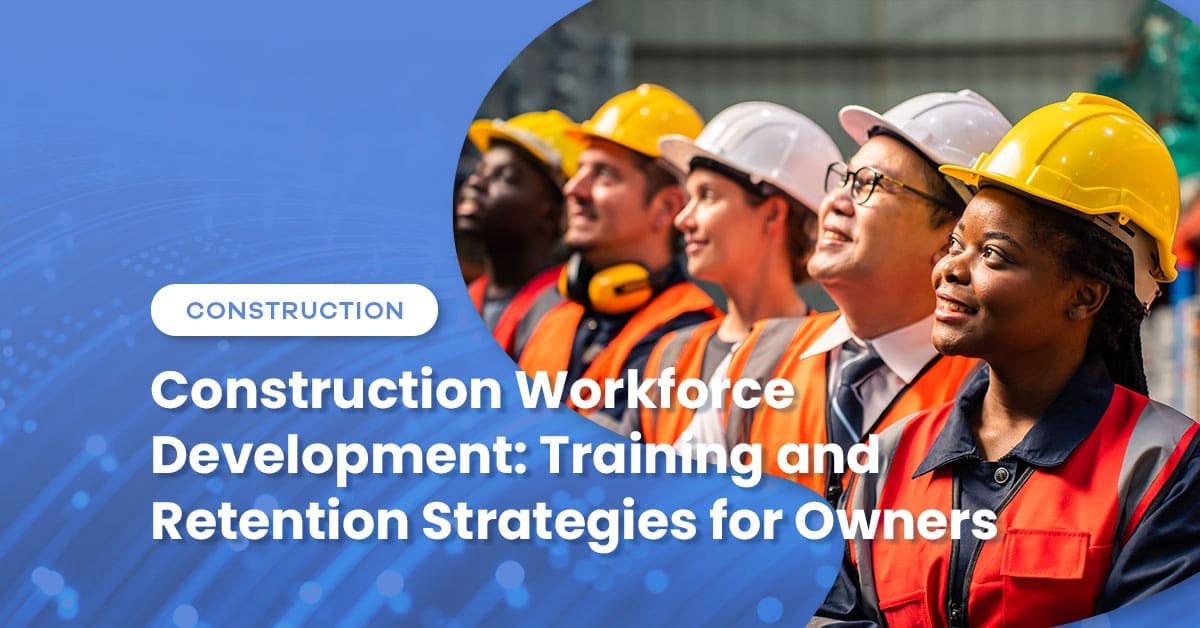
Construction Workforce Development: Training and Retention Strategies for Owners
March 12, 2026
Construction Data Management: Why Your Financial Reporting Is Only As Good As Your Data
March 9, 2026
Commercial Construction Financial Management Best Practices for CFOs
March 6, 2026