


Key Takeaways
- The biggest near-term wins for AI in financial services are not strategic intelligence tools, they are the elimination of high-volume, low-judgment tasks: transaction categorization, reconciliations, and invoice processing.
- AI does not replace accounting judgment. It replaces the infrastructure that prevents your team from exercising it.
- According to BDO’s 2024 CFO Outlook Survey, 36% of CFOs identify the talent shortage as a pervasive risk to their business. AI-assisted workflows directly reduce dependence on headcount for routine financial operations.
- The finance teams getting the most value from AI right now are the ones that defined the problem before they picked the technology.
- Bottom line: AI in financial services is not a moonshot. It’s a series of very unglamorous problems that are finally being solved at scale.
Most CFOs have sat through at least one AI demo that promised to reshape their entire financial operation by next quarter. And most of those CFOs walked out with the same question: yes, but what does it actually do?
That’s the right instinct. AI in financial services is real, and it is producing results, but the honest version of this story is more specific and more useful than the pitch deck version.
The Work AI Is Actually Good At Right Now
The first thing to understand about AI in financial services is where it earns its keep. It is not in strategic forecasting. It is not in replacing your CFO. It is in the parts of financial operations that are high-volume, rules-based, and brutally repetitive.
Transaction categorization. Invoice matching. Bank reconciliation. Expense classification. These tasks require accuracy and consistency but very little judgment. They are also the tasks that consume disproportionate staff time in most finance departments, particularly in mid-sized businesses that lack the headcount to absorb the workload without strain.
AI-powered platforms designed for accounting automation, such as Basis AI, approach these tasks by learning from historical financial data and applying categorization rules at scale. The practical result is not magic. It is that your team stops manually coding transactions and starts reviewing flagged exceptions instead. That is a meaningful operational shift even before you get to the strategic benefits.
Why Talent Scarcity Makes This More Urgent Than It Looks
The accounting profession has a supply problem that is not going away soon. According to BDO’s 2024 CFO Outlook Survey, 36% of CFOs name the talent shortage as a pervasive risk to their business. The AICPA has documented a multi-year decline in the number of accounting graduates entering the profession. Recruiting, onboarding, and retaining skilled accounting staff are slower and more expensive than they were five years ago.
This considerably changes the ROI calculation for AI automation. If your alternative is a manual process supported by a team you cannot fully staff, automation is not a nice-to-have. It is gap coverage with a permanent contract.
Firms that deploy AI-assisted workflows for routine accounting functions free their existing staff to focus on the work that actually requires an accountant: complex reconciliations, variance analysis, audit preparation, and the kind of judgment calls that do not have a lookup table.
Where AI Falls Short and Why That Matters
A CFO who reads only the optimistic coverage of AI in finance will walk into implementation expecting one thing and get another. The shortcomings are worth naming clearly.
AI systems struggle with unstructured data. If your source documents are inconsistent, incomplete, or scattered across disparate systems, the AI inherits those problems. Garbage in, garbage out has not been repealed.
Rapidly changing regulations require frequent model updates and ongoing human oversight. Tax codes shift. Accounting standards evolve. An AI trained on last year’s rules can produce this year’s errors if no one is maintaining it.
Complex judgment calls still require experienced accountants. Multi-entity consolidations, nuanced tax positions, and compliance scenarios involving interpretation are not a territory where current AI performs reliably without a human in the loop.
None of this disqualifies AI: It defines the scope of responsible deployment.
What Good Implementation Actually Looks Like
The finance teams that are getting real results from AI in financial services share a common pattern: they define the problem before selecting the technology. They identified which workflows were consuming the most time for the least judgment. They mapped their data quality before expecting AI to interpret it. They kept their accountants in the loop rather than treating automation as a replacement.
Wiss approaches AI implementation through this lens. Internally, we use Basis AI to automate month-end close and transaction-level accounting tasks within our own outsourced accounting practice — giving our team more capacity to focus on the advisory and strategic work that actually moves the needle for clients.
What AI-Ready Financial Operations Actually Look Like
AI in financial services is not a single technology or a single decision. It is a category of tools that, applied correctly, solves specific operational problems that have been dragging on finance teams for decades. The closing takes too long. Reconciliations consume too much headcount. Reporting cycles leave leadership making decisions with last month’s data.
Those problems have answers now. The CFOs who are pulling ahead are the ones treating AI as a precision instrument rather than a silver bullet.
If your finance operation is carrying manual workloads that should have been automated two years ago, Wiss can help you figure out where to start. Contact our team to learn how we work with companies to build AI-assisted financial operations that actually perform.
 Previous
Share


Related Posts
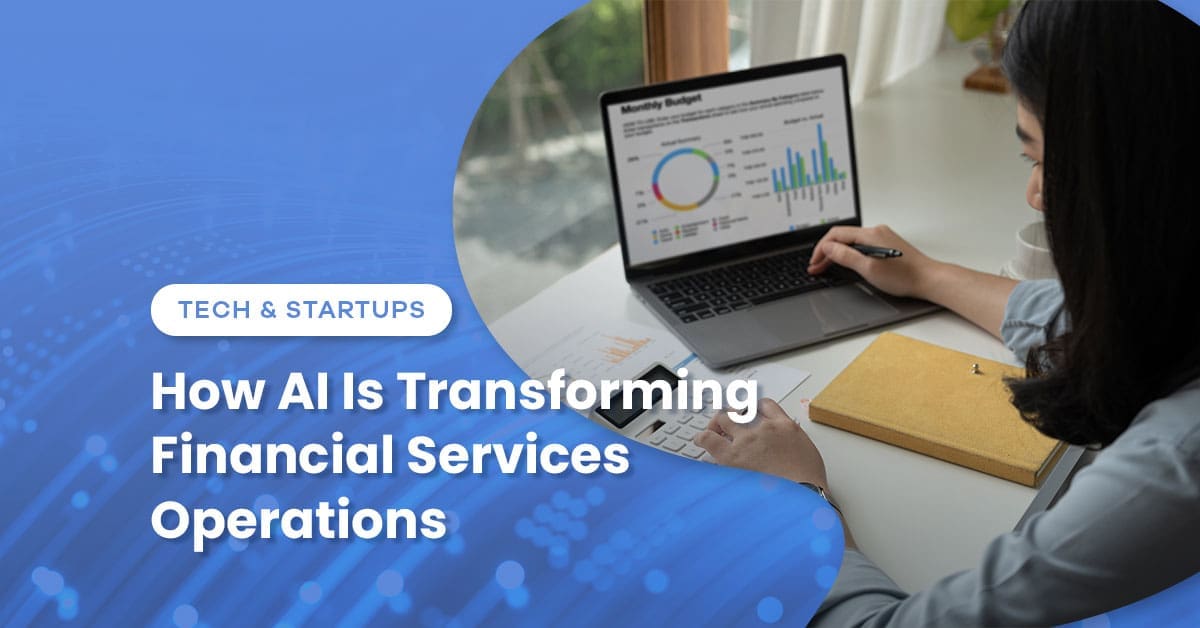
How AI Is Transforming Financial Services Operations
April 8, 2026
Real-Time Data Dashboards for CPG: CFO Decision-Making Tools
April 6, 2026

Product Margin Optimization for Consumer Goods: Data-Driven Decisions
April 6, 2026
Executive Compensation Tax Planning for Nonprofit C-Suite Leaders
April 6, 2026