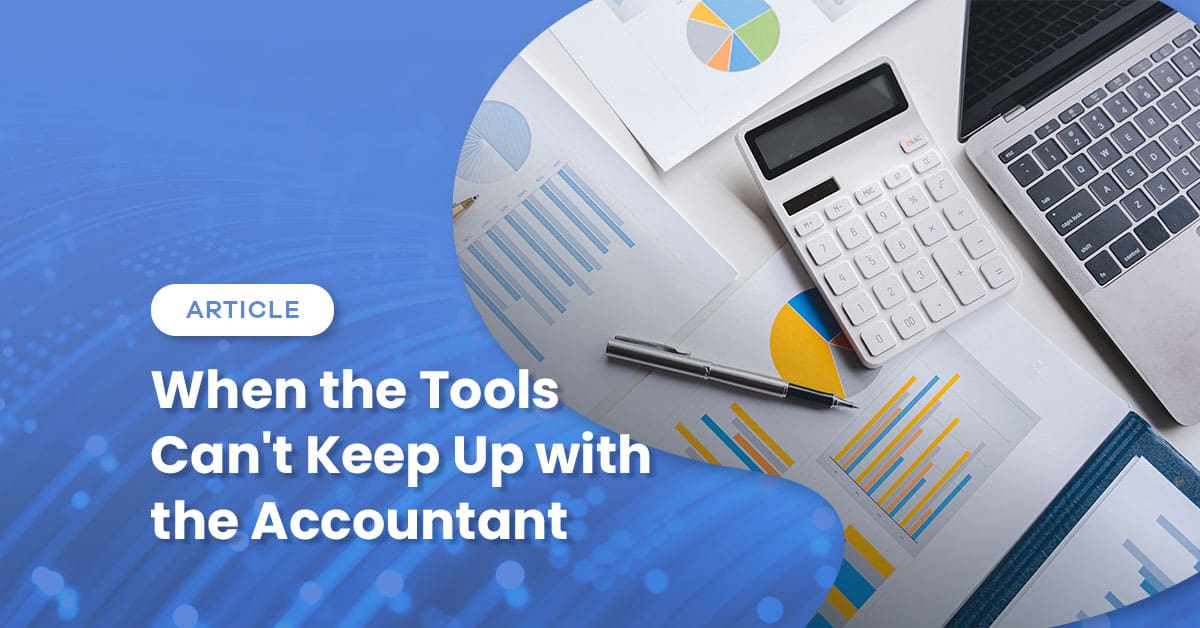



For a profession built around precision, accounting has always been strangely comfortable with imprecision when it comes to one thing: our own workload.
Talk to any accountant during crunch time—tax season, year-end close, audit prep—and you’ll hear the same refrain. It’s not just busy. It’s compressed. The windows keep shrinking, the complexity keeps climbing, and somewhere in the crush of it all, the thing we’re supposed to be good at—clear thinking—gets squeezed out.
There is a quiet truth underneath all that pressure: some of the worst days in this profession aren’t about the hours. They’re about letting the client down. Not because you didn’t care, but because the tools you had couldn’t help you get there.
The Product Trap
Think about tax software. It’s good at what it does: organizing data, producing a compliant return, streamlining what used to be done by hand. But here’s what it doesn’t do—it doesn’t make you a better advisor. It helps you deliver the product, but it doesn’t help you use the product to guide the conversation that matters.
You file the return. The client gets the PDF. But the software hasn’t told you which data point should change the strategy for next year, or where the margin pressure is coming from, or what decision the business owner should actually be weighing right now.
That intelligence gap is real. And it’s exhausting.
When you don’t have the support to add the value you know you’re capable of adding, you start to feel like you’re always one step behind—behind the deadline, behind the client’s expectations, behind your own standards. That’s not a workload problem. That’s a system problem.
The Burnout No One Talks About
Burnout in accounting gets framed as a scheduling issue. Too many hours, too little flexibility, not enough people. And yes, all of that’s true. But there’s another layer to it. The emotional toll of knowing you could do more, and should do more, but the infrastructure around you won’t let you get there.
You feel terrible because you know you are letting your team down when you can’t keep up. You may also be letting down a client when you can’t deliver the insights quickly. This weight sits with us. It’s an awful feeling knowing that you’ll experience disappointment more than fulfillment.
We talk about the highs and lows of accounting like it’s part of the deal. A great day, a brutal week, repeat. I’m shocked that it has sustained for this long! But, it’s reached a point where it’s running on fumes, held together by the people willing to absorb the friction. There’s not much lifespan left.
What Better Looks Like
The tools are finally starting to catch up. AI, automation, better integrations are creating the breathing room to think, to advise, to do the work that actually requires more of our brain.
I understand that technology won’t fix this on its own. It’s not enough to automate the grind if we don’t also redesign the role around insight, strategy, and judgment. If we just speed up the old model, we’ll make it worse on our teammates.
The accountant of the future will not only be able to close the books quicker, but will be much more strategic through delivering insights that used to feel impossible to deliver. Life will be so much more gratifying. That feeling you’ve always wanted – to feel appreciated, to feel in control – it’s coming – let’s make it happen!!!
 Previous


Share


Related Posts
When the Tools Can’t Keep Up with the Accountant
March 3, 2026

Construction Talent Acquisition: What CFOs Need to Know About Winning the Labor War
February 27, 2026
Working Capital Management: How CFOs Fund Growth Without Running Out of Cash
February 24, 2026
How AI Is Revolutionizing Finance Operations for Mid-Market Companies
February 23, 2026