KEY TAKEAWAYS
- 70% of finance team headcount is consumed by billing and collections—the highest of any function in the finance org.
- The invoice delay isn’t a collections problem. It’s a data handoff problem that starts the moment a deal closes.
- 60% of companies are moving to usage-based pricing—and most legacy ERPs can’t handle the billing complexity that comes with it.
- Companies are extending their time on QuickBooks by layering in AI subledgers rather than replacing their ERP entirely.
- Bottom Line: Revenue operations has been the most under-built part of the modern finance stack. That’s changing now—and the firms that act first will carry a structural advantage.
For years, finance leaders chased the collections problem. Faster follow-up. Better aging reports. More calls. The invoices kept going out late anyway.
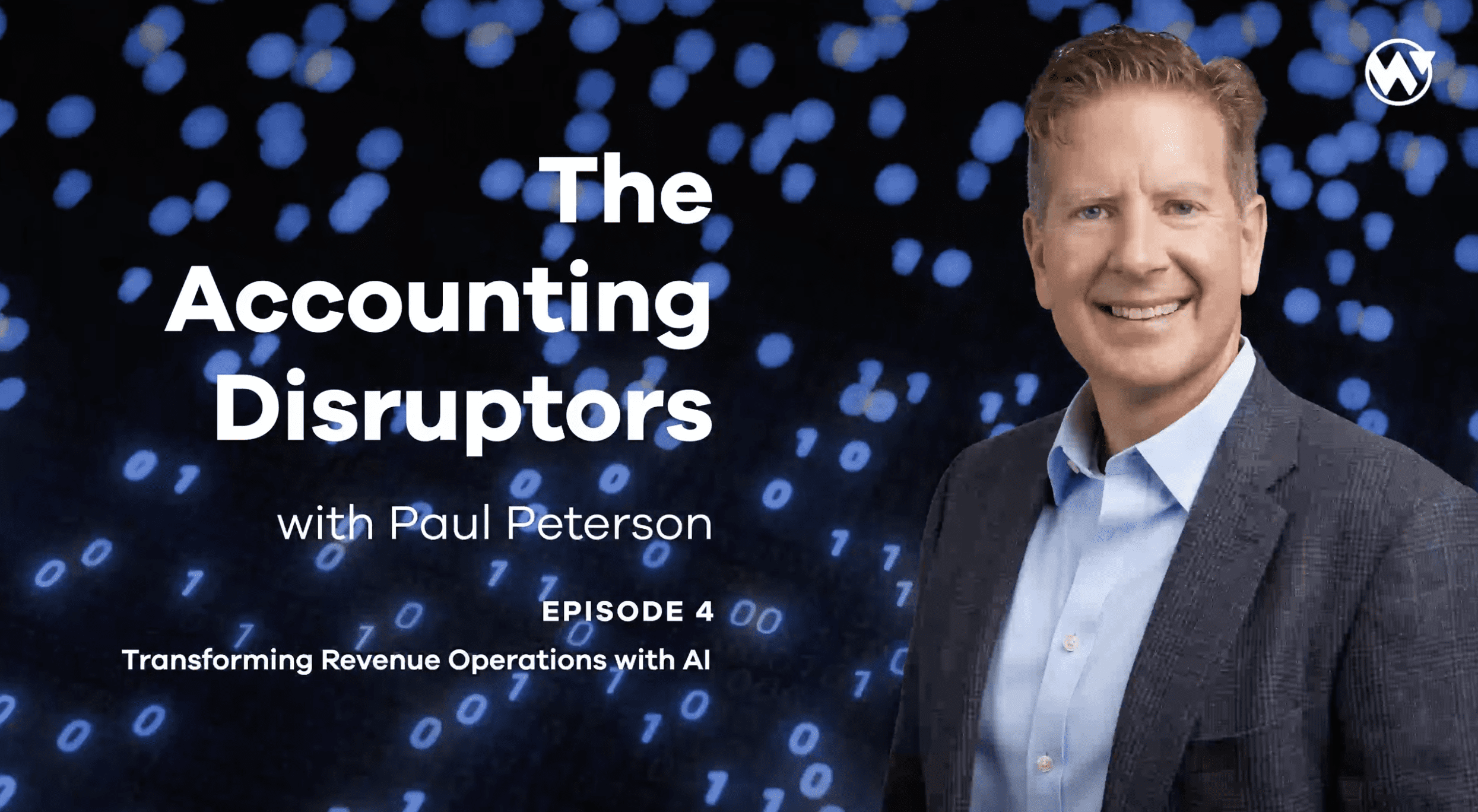
In this episode of the Accounting Disruptors Podcast, Wiss CEO Paul Peterson sits down with Ali Hussain, Founder of Tabs, to diagnose what’s actually happening—and why the real breakdown occurs long before a customer ever receives an invoice.
The Real Problem Isn’t Collections
The breakdown follows a predictable sequence: deal closes end of quarter → data sits in sales for days → accounting closes the books → board meeting happens → invoice finally goes out 16 days late → customer resets the payment clock. By the time collections enters the picture, the delay is already baked in.
Hussain argues that revenue automation has been the forgotten subledger. While AP, spend management, and payroll each attracted waves of investment and technology, the revenue side of the finance stack was largely left behind. The data complexity was simply too high for earlier automation tools to handle.
How AI Cracked the Revenue Automation Problem
The core challenge with automating revenue operations isn’t sending invoices—it’s that the underlying data is fragmented, inconsistently structured, and spread across sales, CRM, and ERP systems that weren’t built to talk to each other.
Hussain explains why that complexity made revenue automation practically impossible for legacy tools—and why AI finally changes the math. The same pattern-recognition capabilities that made AI useful in other domains turn out to be exactly what revenue automation required: the ability to interpret messy, variable data and apply consistent billing logic at scale.
Usage-Based Pricing: The Model Finance Teams Weren’t Built For
Sixty percent of companies are shifting to usage-based pricing. The sales motion is clear. The billing infrastructure usually isn’t.
Usage-based models create a level of billing complexity—variable consumption, multiple rate structures, mid-cycle changes—that most finance teams are managing manually or not managing well. The episode examines what it actually takes to operate usage-based billing without building a dedicated revenue operations function from scratch, and where AI subledgers fit into that picture.
Why Companies Are Staying on QuickBooks—On Purpose
One of the more counterintuitive takeaways from this episode: many companies choosing AI-native revenue automation are deliberately staying on QuickBooks rather than migrating to a larger ERP. The logic is straightforward. A well-configured AI subledger handles the billing complexity that was previously driving ERP migrations—at a fraction of the cost and implementation timeline.
For CFOs weighing ERP upgrades, this conversation reframes the question. The issue may not be your general ledger. It may be what sits between your CRM and your books.
What Implementation Actually Looks Like
The episode closes on the practical question CFOs and controllers ask most: what does it take to get this in place without disrupting current operations? Hussain walks through what implementation typically involves, what the friction points are, and what a realistic timeline looks like for a finance team that’s starting from a standing position.
In This Episode
- Why billing and collections consume more finance headcount than any other function
- The deal-close-to-invoice sequence that explains most late payment problems
- How AI finally addressed the data complexity that made revenue automation impractical
- Usage-based pricing: why 60% of companies are moving there—and what billing actually requires
- Why smart AI subledgers are extending the life of QuickBooks for growth-stage companies
- What implementation looks like without disrupting current operations
- Why this moment in finance history matters for teams that move now
Episode Timestamps
- 0:00 – Introduction
- 3:00 – Why Revenue Automation Was the Forgotten Subledger
- 7:00 – The Deal-Close-to-Invoice Breakdown: Where the Delay Actually Happens
- 12:00 – How AI Cracked the Data Complexity Problem
- 17:00 – Usage-Based Pricing: What 60% of Companies Are Moving To
- 22:00 – Why Companies Are Staying on QuickBooks with AI Subledgers
- 27:00 – The Headcount Problem: Billing, Collections, and Finance Team Capacity
- 32:00 – What Implementation Looks Like in Practice
- 37:00 – Where Revenue Automation Is Headed Next
Is your finance team still managing billing manually—or chasing invoices that went out two weeks too late? What would change if revenue data moved from your CRM to your books without a handoff delay?
About the Guest
Ali Hussain — Founder, Tabs
Ali founded Tabs to solve the revenue operations problem that legacy ERPs and billing tools left behind. His work sits at the intersection of AI, finance infrastructure, and the shift toward usage-based business models.
About the Host
Paul Peterson — CEO, Wiss
Paul Peterson is the CEO of Wiss, an accounting, tax, and business advisory firm at the intersection of accounting, finance, and AI. Through strategic partnerships with companies like Basis AI and Rillet, Wiss is pioneering AI-optimized accounting solutions that deliver real-time financials and strategic insights.
Ready to Rethink Your Revenue Operations?
Wiss works with CFOs and business owners to evaluate where AI-powered tools can create real capacity in their finance function—not just reduce cost, but improve the speed and accuracy of revenue intelligence available to leadership. Talk to a member of our team to see what that looks like in practice.
→ Contact Wiss to Schedule a Conversation | Explore Wiss Outsourced Accounting Services
About the Series: The Accounting Disruptors Podcast features conversations with founders and finance leaders rebuilding the accounting profession through AI, automation, and technology. Powered by Wiss Labs.
 Previous

Share