


Key Takeaways
- Form 1023 must be filed electronically through Pay.gov — paper submissions are no longer accepted.
- File within 27 months of your organization’s formation date to secure tax-exempt status retroactive to that date. Miss that window and your exemption starts on the filing date, not your founding date.
- Smaller organizations may qualify for Form 1023-EZ, a streamlined version with fewer requirements.
- Three consecutive years of missed annual filings result in automatic revocation of tax-exempt status — with no exceptions.
- Bottom Line: Form 1023 is not a mission statement exercise. The IRS needs a detailed description of your actual activities, not your aspirations.
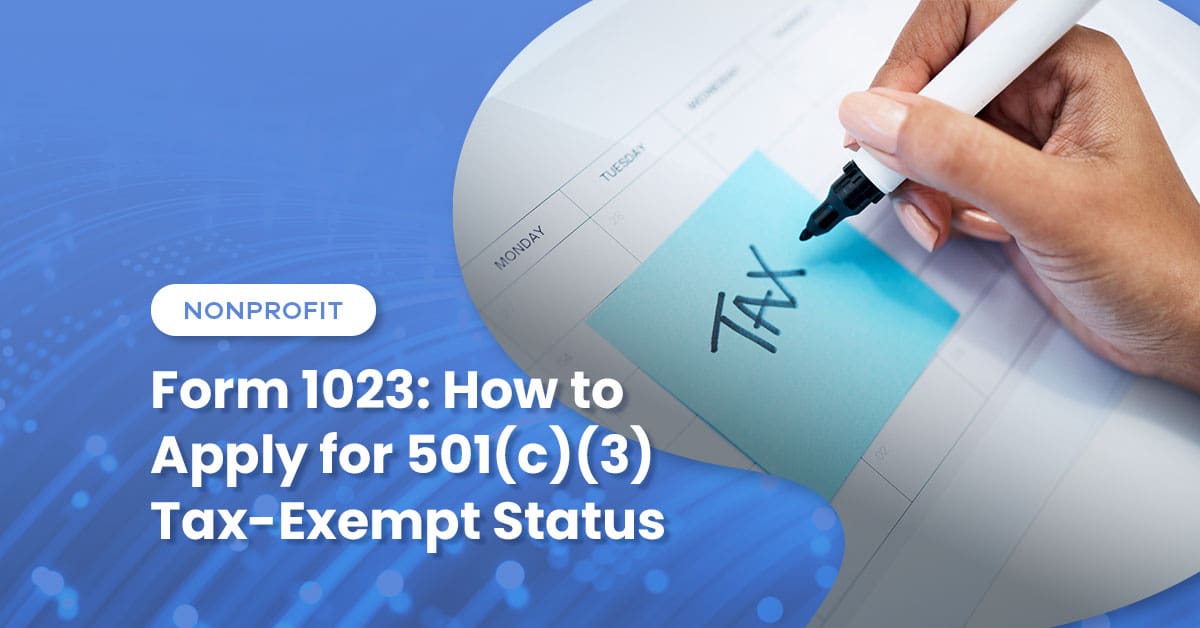
Getting 501(c)(3) status is the first financial and legal milestone for most nonprofit organizations. It determines whether donations to your organization are tax-deductible, how you’re classified for state registration purposes, and what annual reporting obligations follow. The vehicle for that recognition is Form 1023, Application for Recognition of Exemption Under Section 501(c)(3) of the Internal Revenue Code.
Here is what founders and executive directors need to understand before filing.
Who Files Form 1023
Most organizations seeking recognition under section 501(c)(3) must file Form 1023. Three types of organizations are not required to file, though they may choose to — churches and certain integrated church auxiliaries, and organizations with gross receipts of $5,000 or less in each tax year.
Smaller organizations that don’t fall into those exempt categories should check eligibility for Form 1023-EZ, a streamlined application available at IRS.gov. The 1023-EZ eligibility worksheet determines whether your organization qualifies based on projected gross receipts, asset levels, and activity type.
The 27-Month Filing Window
Timing matters. If you file Form 1023 within 27 months of the end of the month in which your organization was legally formed, and the IRS approves your application, your tax-exempt status is effective retroactive to your formation date. That means donations received before you filed can still qualify as tax-deductible contributions.
File after that 27-month window, and your exemption begins on the date you submit the application — not when your organization was formed. Retroactive reinstatement is possible in some circumstances, but requires demonstrating reasonable cause and good faith, and is not guaranteed.
What the IRS Actually Wants to See
The most common reason Form 1023 applications require back-and-forth with the IRS is insufficient detail about activities. A mission statement is not enough. The IRS requires a specific narrative describing what your organization does, who carries out each activity, where it occurs, what percentage of your total time and expenses each activity represents, how it is funded, and how it furthers your exempt purpose.
If you plan to run an after-school tutoring program, describe the program — the curriculum, the students served, the funding sources, and how it advances educational purposes under section 501(c)(3). Vague language about “assisting underserved youth” will generate follow-up questions.
Required Documents and Financial Data
A complete Form 1023 submission includes your organizing document (articles of incorporation, trust agreement, or articles of association), your bylaws (if adopted), and financial data. Organizations that have existed for less than one year provide projected revenue and expense statements for three years. Organizations with 1 to 4 years of history provide actuals for completed years and projections for the remaining years. Organizations with 5 or more years of history provide the 5 most recent completed tax years.
All attachments must be consolidated into a single PDF file before submission through Pay.gov, which also collects the required user fee at the time of filing.
After You File
The IRS processes applications in the order received. Expedited review is available in limited circumstances — a pending grant where loss of funding would threaten operations, disaster relief, or an IRS processing error — but expedited review does not guarantee faster approval; it only guarantees faster placement in the queue.
While your application is pending, annual filing obligations still apply. If a Form 990-series return comes due before you receive your determination letter, file the return and mark “Application Pending” in the heading.
Once approved, your determination letter confirms your 501(c)(3) status, your foundation classification (public charity or private foundation), and your annual filing requirements. That letter is the document donors, grantmakers, and state regulators will ask to see.
The Annual Filing Requirement That Cannot Be Ignored
Tax-exempt status is not permanent by default. Organizations must file annual information returns — Form 990, 990-EZ, 990-PF, or 990-N, depending on size and classification — every year. Three consecutive years without a required filing result in automatic revocation of exempt status. Reinstatement requires a new application and, in most cases, payment of another user fee.
The Wiss tax advisory team assists nonprofits at every stage of the exemption process — from initial formation and Form 1023 preparation to annual compliance and reinstatement after revocation.
 Previous


Share