
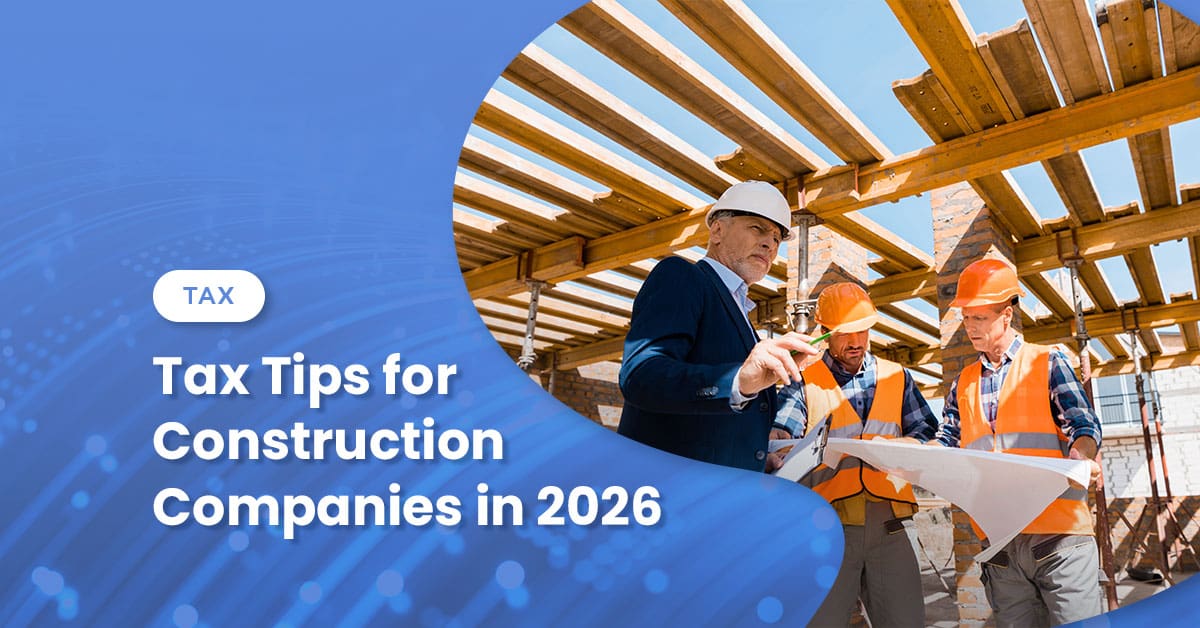
Key Takeaways
- 100% bonus depreciation is back: Write off equipment, trucks, and tools in year one if placed in service after January 19, 2025
- Residential projects get simpler accounting: All residential construction—including large multifamily—can now avoid percentage of completion method
- R&D costs deductible immediately: No more five-year capitalization for domestic research expenses
- QBI deduction now permanent: 20% deduction for pass-through entities secured long-term
- Energy incentives are tightening fast: 179D generally ends for projects beginning construction after June 30, 2026, and several solar/wind credits have earlier cutoffs or stricter begin-construction/placed-in-service timelines—review your project pipeline now
- Business interest limitation: the limitation has been changed to generally increase the amount of deductible interest
- Bottom Line: Document equipment in-service dates, review which contracts qualify for new residential treatment, and coordinate with your tax advisor before year-end to maximize deductions.
Construction firms navigating 2026 face the first full tax year under the One Big Beautiful Bill Act. The changes touch everything from equipment purchases to how you recognize revenue on residential projects. Getting ahead of these shifts now means more cash in your account and fewer surprises when you file.
Equipment Expensing Just Got More Generous
Contractors who invest in machinery and vehicles in 2026 have multiple ways to accelerate deductions and improve cash flow.
100% Bonus Depreciation Returns
Contractors who buy equipment can now write off the full cost in the first year. The 100% bonus depreciation applies to qualified property placed in service after January 19, 2025. This matters for excavators, trucks, tools, and technology purchases you’ve been considering.
You generally need the asset delivered, installed (if applicable), and ready/available for its intended use before year-end—not merely ordered or sitting unprepared.
Section 179 Limits Increased
Section 179 caps jumped to $2.5 million for 2025, with phaseout beginning at $4 million, indexed for inflation beginning in 2026, in equipment purchases. This gives mid-sized contractors more flexibility in choosing between Section 179 and bonus depreciation for tax planning.
Section 179 works line-by-line—you pick which assets get the deduction. Bonus depreciation casts a wider net across asset classes. Many firms use both strategically, applying Section 179 to specific high-value items and bonus depreciation to everything else.
Documentation Matters
Create a simple tracking system for each asset: purchase order date, delivery date, and in-service date. This paperwork protects your deductions if the IRS questions timing. It also helps your accounting team reconcile fixed asset schedules with general ledger entries.
Revenue Recognition Changes for Residential Work
The One Big Beautiful Bill Act (OBBBA) significantly expanded the exception to the percentage-of-completion method (PCM) for residential construction contracts, giving many contractors greater flexibility in recognizing income for tax purposes.
Expanded Relief from Percentage of Completion
Under prior rules, only certain “home construction contracts”—generally buildings with four or fewer dwelling units—could avoid PCM. OBBBA broadened this exception so that most residential construction contracts now qualify, including large multifamily projects such as apartment complexes, student housing, and many senior living facilities.
This change allows qualifying residential contracts to use alternative permissible accounting methods, such as the completed contract method, which may better align taxable income with cash flow and project completion timing.
What Qualifies as Residential
The key distinction is whether the project consists of non-transient dwelling units. Apartment buildings and condominiums typically qualify. Hotels and other transient-use properties generally do not. Mixed-use projects require additional analysis and often depend on the contract’s structure and documentation.
Importantly, subcontractors working on qualifying residential projects may also benefit from this expanded exception, even if the prime contractor performs both residential and commercial work.
Contractors with Both Residential and Commercial Work
Many construction firms perform a mix of residential and commercial projects. Under the new rules, the accounting method is determined contract by contract, not at the company level.
A contractor may:
- Apply a non-PCM method to qualifying residential contracts, while
- Continuing to use PCM for commercial, industrial, or other non-qualifying projects.
This makes accurate job setup and documentation critical. Contractors should clearly identify contract type, maintain support for residential classification, and ensure work-in-progress schedules align with the chosen tax accounting method.
Timing and Implementation Considerations
The expanded residential exception applies to contracts entered into in tax years beginning after July 4, 2025. For calendar-year contractors, this generally means contracts signed in 2026 and later.
Adopting different methods across contract types can impact tax reporting, WIP schedules, and internal forecasting. Method changes may require formal elections or filings, and contractors should coordinate closely with their tax advisor before implementation.
For firms that perform both residential and commercial work, thoughtful planning now can prevent reporting inconsistencies, improve cash-flow timing, and reduce administrative complexity as new projects begin.
R&D Costs Get Immediate Deductions Again
Construction companies that innovate can now deduct research expenses in the year they’re incurred, rather than capitalizing them over five years.
The Five-Year Capitalization Rule Ends
Construction firms that design custom solutions, develop new techniques, or test materials may qualify for R&D tax treatment. The Tax Cuts and Jobs Act required capitalization of these costs over five years. OBBBA restores immediate deductions for domestic research expenses.
This change applies to costs paid or incurred in tax years beginning after December 31, 2024. Most contractors can immediately deduct 2025 R&D costs.
Handling Prior Year Capitalized Costs
Companies that capitalized R&D costs from 2022-2024 have options. Small taxpayers can amend prior returns and potentially receive refunds. Other taxpayers can deduct the unamortized basis in 2025 or spread it between 2025 and 2026.
What Counts as R&D
Qualifying for R&D tax treatment is complex and hinges on several critical factors. A key requirement is that the company must bear the risk of loss for the research activities. This creates a significant challenge for many contractors: if you’re reimbursed for expenses through your contract, you typically don’t have the necessary risk of loss for those costs to qualify as R&D.
Activities like designing specialized formwork, developing new construction techniques, testing material combinations, or creating custom software may seem like research. However, whether these activities qualify depends on factors including:
- Whether your company bears the financial risk if the research fails
- Whether the research is funded by the client versus self-funded
- The specific nature and purpose of the work
- Detailed technical and economic substance requirements
Given these complexities, construction companies should consult with an R&D study expert to determine if any of their activities qualify for R&D tax treatment. A qualified specialist can evaluate your specific circumstances, including your contract structures and development activities, to identify legitimate opportunities while ensuring compliance with IRS requirements.
Designing specialized formwork for unique architectural features, developing techniques for challenging site conditions, testing material combinations for specific performance requirements, and creating custom software for project management or estimating all potentially qualify.
Document these activities as they happen. Save project notes, test results, design iterations, and employee time records that demonstrate the research nature of the work.
Qualified Business Income Deduction Becomes Permanent
Pass-through entities—S corporations and partnerships—can now count on the 20% qualified business income (QBI) deduction indefinitely. This provision was scheduled to expire, creating uncertainty for tax planning. OBBBA made it permanent.
For construction company owners taking distributions, this means 20% of your qualified business income is deducted from your taxable income before calculating tax liability. The deduction works in addition to standard business expenses.
Income from specialized service trades is subject to limitations at higher income levels. Most general contractors don’t fall into these restricted categories, but architectural and engineering design firms might. Consult your tax advisor if you’re unclear where your business lands.
Manufacturing Facility Incentives Create Construction Opportunities
New tax provisions for manufacturers will likely drive industrial construction demand over the next few years.
Qualified Production Property Provisions
OBBBA introduced 100% expensing for Qualified Production Property—manufacturing facilities that meet specific requirements. This creates demand for contractors who build industrial facilities.
To qualify, construction must begin after January 19, 2025, and before January 1, 2029, with the facility placed in service before January 1, 2031. That’s a tight window driving urgency for these projects.
What This Means for Contractors
Manufacturers can expense the full cost of new facilities in year one. This incentive will likely increase industrial construction activity over the next few years. Contractors traditionally focused on other sectors may pursue these opportunities.
Review your bonding capacity, equipment needs, and workforce availability. Manufacturing facility projects often involve specialized requirements—different from residential or commercial work that many firms handle.
Interest Deduction Limits Improved
OBBBA restored the business interest deduction to an EBITDA-based calculation (30% of earnings before interest, taxes, depreciation, and amortization). The previous EBIT-based formula was more restrictive.
For construction firms financing equipment purchases or using lines of credit to manage cash flow between progress payments, this change increases your deductible interest. Model your typical borrowing patterns to understand the impact on your effective tax rate.
Energy Efficient Commercial Buildings Deduction (Section 179D)
Section 179D provides a tax deduction for energy-efficient improvements to commercial buildings, including lighting, HVAC, and building envelope systems that meet specified efficiency standards. The deduction can be claimed by building owners, or in certain cases, allocated to designers and contractors on qualifying government-owned projects.
Updated Timing and Sunset Rules
Under OBBBA, Section 179D generally expires for property for which construction begins after June 30, 2026. Projects that begin construction on or before that date may still qualify, provided all technical requirements are met.
Because eligibility is tied to when construction begins, contractors and design-build firms should carefully document project start dates and coordinate with owners and tax advisors early in the planning phase.
Payroll Changes for Overtime and Tips
New federal tax treatment for overtime wages and tips requires payroll system updates and clear employee communication.
New Federal Income Tax Treatment
Starting in 2026, overtime wages and tips will be treated differently for federal income tax purposes. Employees can deduct up to $25,000 (for joint filers). This doesn’t affect employer payroll taxes—FICA, FUTA, and workers’ compensation still apply to these wages.
The IRS has issued guidance for individual taxpayers on how to claim these deductions on tax returns. However, detailed employer guidance on payroll withholding and reporting is still pending. As a result, employers should continue standard payroll withholding for federal income tax, Social Security, and Medicare until further instructions are released.
System Updates Required
Contractors should ensure their payroll systems can identify qualified overtime amounts, monitor IRS updates, and communicate clearly with employees – especially since state tax treatment may differ. Review your payroll system codes to ensure correct calculations. Run test payrolls to catch any issues. Your employees will see differences between gross pay and taxable pay on their stubs—communicate these changes clearly to avoid confusion.
Some states may not conform to federal treatment. Check whether your state follows federal rules or maintains separate overtime wage treatment for state income tax purposes.
Planning Checklist
Build your equipment purchase plan. Identify machinery, vehicles, and tools you want to acquire this year. Confirm delivery schedules and in-service dates to capture deductions.
Review work-in-progress schedules. Identify which contracts qualify for the residential exception. Document the basis for any accounting method changes with your CPA.
Model R&D deduction strategies. Determine whether immediate expensing or capitalization better serves your multi-year tax planning.
Validate payroll system readiness. Ensure overtime and tip calculations align with new IRS guidance.
Assess green building project timing. Lock in 179D deductions and solar credits before sunset provisions take effect.
State Conformity Issues to Watch
Not every state follows federal tax treatment for equipment expensing, bonus depreciation, or QBI deductions. Some states cap Section 179 deductions below federal limits. Others decouple from bonus depreciation entirely.
If you operate in multiple states, plan for state-specific add-backs to federal taxable income. These adjustments affect estimated tax payments and can create unexpected liabilities if you don’t account for them.
Work with your tax advisor to model state conformity issues before making major equipment purchases or accounting method changes.
How Wiss Helps Construction Firms Navigate Tax Planning
Wiss Tax Advisory Services works with construction companies managing complex tax situations under OBBBA. We help contractors evaluate equipment purchase timing, model revenue recognition method changes, document R&D activities for tax purposes, and structure multi-year tax planning that accounts for both federal and state requirements.
Our team understands construction-specific tax issues—from PCM calculations to work-in-progress accounting to bonding considerations that affect entity structure decisions. We coordinate with your CFO, controller, and operations team to implement strategies that work with your project schedules and cash flow patterns.
Ready to optimize your construction company’s 2026 tax strategy? Contact Wiss for a consultation on your specific situation and project mix.
 Previous


Share


Related Posts

Data Centers Are Raising Neighborhood Temperatures, New Research Shows
June 12, 2026

Calculated Industries Adds AI Assistant to CMPro App
June 12, 2026
World Cup 2026 NJ Construction Boom: What Contractors Need to Know
June 11, 2026
Construction Labor Shortage: Financial Impact and CFO Responses
May 29, 2026